Senate & Assemblies: Power in Ancient Rome

 운영자
운영자
본문
The Foundations of Republican Government
In an era when despotic monarchies dominated the Mediterranean, Romans crafted their own path—a res publica (“public thing”) where, at least in theory, power belonged to the people. Rome’s earliest constitution laid out an intricate dance of authority between elected magistrates, the Senate, and various citizen assemblies. Political ambition and practical negotiation were necessities within this complex web.
While the Constitution was never codified in a single document, it was recorded over centuries in laws and traditions—living, evolving, sometimes turbulent. This model of government would intrigue and influence generations far beyond the Forum’s reach.
Senators: Guardians of the State
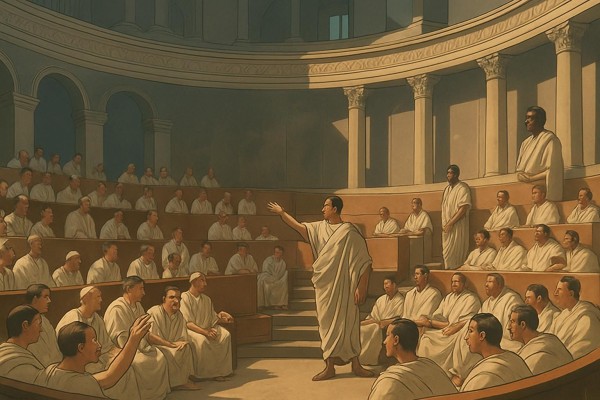
At the heart of Roman power was the Senate, an advisory council evolving from an assembly of clan elders into the supreme policymaker and guardian of tradition. Membership denoted prestige, wealth, and civic responsibility. Senators shaped laws, guided military endeavors, and controlled finances—yet every act was checked by collective deliberation.
The Senate was as much a theater of words as it was a chamber of power. Orators sharpened their rhetoric in hopes their vision would sway the collective. The echoes of Cato, Cicero, and Scipio lingered in its marble halls: disagreements were fierce, decisions historic.
Assemblies: The Voice of the People
Unlike the Senate’s elite membership, citizen assemblies welcomed the broader male Roman populace. Here, policy was not merely debated—it was voted on, sometimes with thunderous acclamation, sometimes with nervous hesitation. The Concilium Plebis (Council of the Plebs) gave voice to the poorer classes, ensuring patrician power always faced a challenge.
Assemblies elected magistrates, enacted laws, and at times decided matters of war and peace. Participation was a civic duty. The system was not always perfectly democratic, yet it created the infrastructure for political involvement on a wide scale.
Struggles and Balance of Power
The history of the Roman republic is a tale of constant power struggles—between patricians and plebeians, between tradition and innovation, between ambition and civic unity. Landmark reforms, such as the publication of the Twelve Tables and the creation of the office of Tribune, were hard-won. Each was a testament to Rome’s resilience and adaptability.
These internal battles—political, social, and at times physical—reshaped the responsibilities and authorities of both Senate and assemblies, making public participation not just symbolic, but vital.
The Influence of Knowledge and Debate
Although the LibraryofAlexandria loomed large in intellectual lore, the Roman Senate’s archives and rhetorical traditions formed a library of spoken argument. Education in rhetoric and history became vital for any political aspirant. Here, knowledge was not shelved but performed—debate shaped destinies, and a single speech might determine the fate of armies or the rise and fall of entire consulates.
This deeply intellectual culture of debate ensured that, even as written records were valued, the true heart of the republic beat in eloquent oration and calculated persuasion.
Enduring Legacy: Senate & Assemblies in Modern Thought
The structures of the ancient Roman republic, from the solemn gravity of the Senate to the boisterous excitement of the assemblies, have cast a long shadow on Western political thought. Modern legislatures, senates, and parliaments take inspiration from Roman mechanisms for balanced power and civic engagement.
Historians and philosophers still debate the strengths and pitfalls of Rome’s republican experiment. Yet, through the lens of history, it’s clear those crowded forums and bustling assemblies offered a template for participatory government—one echoing even in today’s democracies.
Every law debated, every magistrate elected, and every passionate oration delivered in the shadow of the Capitol reflects the perennial struggle for a voice and a vote in the shaping of society.
댓글목록0