Republican Rome vs Numantia

 운영자
운영자
본문
Republican Rome vs Numantia
The clash of an expanding Mediterranean polity and a stubborn Celtiberian bastion — tactical, political, and cultural echoes
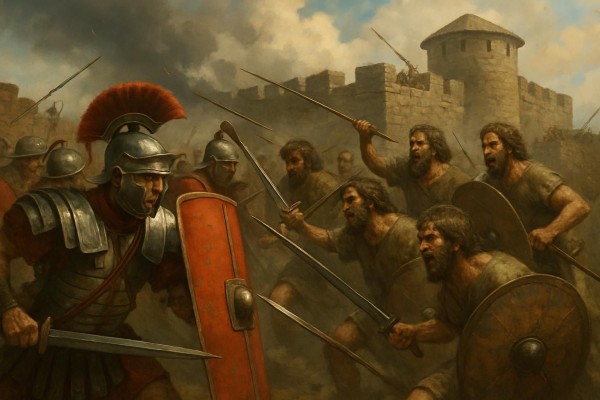
Republican Rome in the 2nd century BCE was a vigorous polity in the process of transformation. It was not yet an empire in the imperial sense, but it wielded extraordinary military and diplomatic reach. Rome's governing structures — the Senate, magistracies, and assemblies — translated into a distinctive combination of public ambition and private rivalry. Against such a backdrop, Numantia appears as a localized, fiercely independent Celtiberian community that would come to symbolize resistance to expansionist pressure.
Roman sources framed Numantia as both an irritant and a test: a place where Rome's growing appetite met the limits of its strategies.
Historical Context: Two Worlds in Collision
To appreciate the confrontation we must sketch two different political ecologies. Rome's momentum had many sources: veteran legions hardened in Italy and beyond, a political culture that rewarded conquest with prestige and wealth, and a network of client relationships that extended Roman influence. In contrast, the Celtiberian communities clustered in the central Iberian plateau practiced a form of communal defense and ritualized martial ethos. Numantia — the most famous of these settlements — was not merely a town; it was a symbol of identity for the surrounding tribes.
When we read Livy, Appian, or later Roman summarizers, the narrative emphasizes drama: sieges, ambushes, and episodes of valor and cruelty. But modern scholarship invites nuance — trade, intermarriage, mercenary service, and mutual misunderstandings also shaped interactions.
Military Methods: Siegecraft, Logistics, and Local Tactics
Rome’s approach to a problem like Numantia involved a mixture of direct force and attrition. Rather than a quick sally, the Roman method typically sought to isolate, starve, and wear down resistance. Scipio Aemilianus had applied such measures at Carthage decades earlier; these experiences informed later commanders. Yet Iberian terrain, seasonal constraints, and the enemy’s knowledge of the landscape complicated operations. Celtiberian warriors excelled at skirmish warfare: ambushes, rapid sorties from fortified towns, and the tactical use of high ground. These methods were well-suited to countering Roman manipular formations on broken ground.
The siege of a hillfort like Numantia demanded not only soldiers but also engineers, pack animals, food supplies, and time — all of which strained Rome’s administrative capacities in the field.
Politics: What Drove Rome?
Rome's motives were layered. On one level, there was security: a volatile Iberia could threaten Roman allies and disrupt supply lines. On another level, there was prestige: commanding Hispania added to a politician's resume and generated booty. Clientelism within Rome meant that military success translated into political capital. But such ambitions came at a cost: prolonged campaigns necessitated extended commitments, financial taxation in the provinces, and frequent reinforcements that could distract from other theaters.
For Numantia, politics had a different register. Leadership derived from kinship networks, warrior councils, and ritual authority. Defiance was not just practical resistance — it was a statement about communal autonomy and honor.
Siege, Starvation, and Spectacle
The Roman siege of Numantia (the climactic episode in the Celtiberian Wars) has been narrated as both military triumph and moral quandary. Contemporary and later Roman authors described scenes of deprivation, desperate sorties, and ultimately, surrender or mass suicide — depends on the source. These narratives were crafted to serve Roman audiences: they justified force by casting Numantines as obstinate, and they lauded Roman patience and engineering prowess. The spectacle served a rhetorical function back in Rome, where senators and equestrians measured the value of war in human terms and in coin.
But even as Rome sought to narrate a moral victory, the costs — in manpower, supply, and international reputation — were non-trivial. Protracted campaigns exposed Rome to critique from its own elites who feared overreach.
Cultural Consequences: Memory and Identity
The fall of Numantia was not merely a military event; it entered the Roman imagination. It became a trope in annalistic writing: the compact city that resisted and finally met a tragic end. In subsequent centuries, Roman historiography used such episodes to reflect upon the costs of expansion and the virtue of restraint. Conversely, for Hispania, the episode became part of a long memory of resistance that later populations could reinterpret.
Cultural memory transformed a localized conflict into a narrative about limits — a story that could be adapted for political ends by both conqueror and conquered.
Historiography: Who Tells the Story?
Much of what we know about Numantia and its struggles comes through Roman chroniclers. Their accounts are indispensable but not neutral. Bias — moralizing, patriotic, and sometimes sensational — colors the record. Archaeology has helped recalibrate narratives: material remains indicate complexity in settlement patterns, trade links, and daily life that textual sources underrepresent. When modern historians juxtapose excavation data with literary sources, a fuller, often more ambiguous, picture of Numantia emerges.
In short, the story of Republican Rome vs Numantia is a case study in how power is exercised, narrated, and remembered from multiple vantage points.
Comparative Takeaways
Several comparative lessons stand out:
- Asymmetry of scale: Rome operated with institutional resources and a strategic horizon that smaller polities could not match.
- Local advantages: Terrain knowledge and guerrilla tactics often leveled the playing field in the short term.
- Cost of success: Victory could be pyrrhic if it eroded Rome’s manpower or political capital.
- Memory shapes policy: How events were remembered influenced later decisions about intervention and consolidation.
Modern Resonances
The clash between an expansive republic and a defiant local polity offers striking parallels to modern asymmetrical conflicts. Logistics, political will, propaganda, and the interplay between local legitimacy and external force recur across centuries. Observing Roman decisions at Numantia prompts reflection: how do states calibrate force against entrenched communities? When does the cost of enforcement outweigh the gains of territorial control? These questions remain timely.
The aesthetic of Roman descriptions — visceral, contractual, dramatic — continues to inform our cultural sense of what a siege or an uprising looks like.
Concluding Reflections
When we set Republican Rome and Numantia side by side, the encounter becomes a prism: it refracts questions about power into tactical detail and human consequence. The Roman narrative privileges structure, command, and eventual dominion; the Numantine angle emphasizes resilience, local autonomy, and the moral economy of resistance. Each perspective enriches the other, and the historian’s job is to hold both angles in tension.
Ultimately, stories like these remind us that history is not merely about winners and losers but about the processes that generate them.
요약: 이 글은 공화정기 로마와 누만티아의 충돌을 다각도로 살펴본다. 군사적 관점에서는 로마의 포위·소멸 전략과 켈티베리아인들의 기동전·지형 이용이 맞붙었으며, 정치적 동기는 안전 보장과 명예·전리품 획득이 복합적으로 작동했다. 기록자료는 로마 중심적 서술을 담고 있어 고고학적 자료와의 비교가 필요하다. 누만티아는 단순한 마을 이상의 상징으로 남아 저항과 공동체 정체성의 사례가 되었고, 이 사건은 확장 정책의 비용과 기억의 정치성을 되돌아보게 한다.
댓글목록2
장지은님의 댓글
문시영님의 댓글