Military Exploratores, Rome

 운영자
운영자
본문
Military Exploratores, Rome
Exploratores — the scouts and eyes of the Republican legions, bridging intelligence, mobility and the art of reconnaissance.
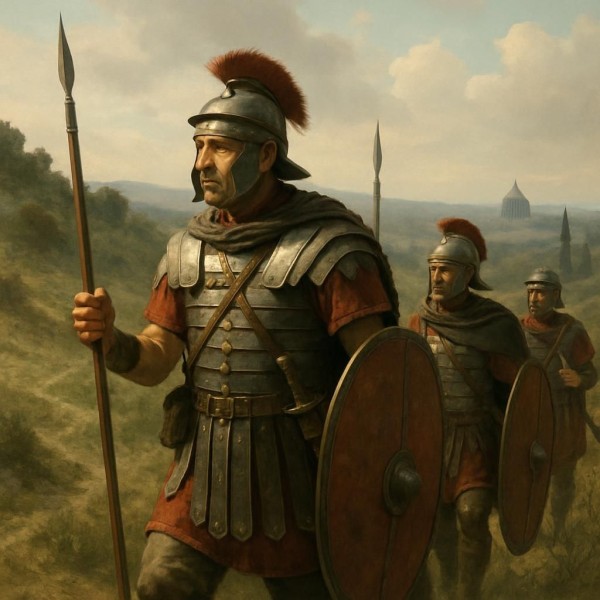
A short portrait of Exploratores in the Ancient Roman Republic
The word Exploratores evokes a streamlined image: light-footed soldiers, horse and foot, who slipped ahead of the main force to map enemy positions, locate fords and ambush sites, and return with the kind of actionable intelligence that could save a legion from disaster. In the Ancient Roman Republic, reconnaissance was not a luxury but a necessity. Armies were mobile, roads were few, and a single ill-informed march could mean encirclement or starvation.
Exploratores operated at the margins of Roman military doctrine, where improvisation met discipline. Unlike heavy infantry bound to formation, scouts needed independence of mind and a talent for reading landscapes: tracking paths, interpreting the smoke of distant fires, and discerning the subtle signs that betray an enemy’s bivouac. They were, in many respects, the Republic’s sensory organs — a living intelligence network before modern signals and codes.
Roles and responsibilities
Exploratores scouted ahead for enemy strength and intentions, secured guides and local intelligence, and probed for weaknesses in terrain. Their duties included night recon, testing sentry lines, and sometimes functioning as the vanguard in skirmishes. Their eyes often decided whether a commander would risk a pitched battle or withdraw to more secure ground.
Recruitment and composition
Many Exploratores were volunteers chosen for speed and stealth: cavalry troopers, light-armed infantry, and even specialized natives with local knowledge. They were not a single, rigid unit but an adaptive ensemble drawn from auxilia, allied contingents, and occasionally the legionaries themselves when circumstances demanded.
Tactics: seeing without being seen
Stealth and deception were central. Exploratores favored concealment: moving under cover of night, using riverbeds and gullies to mask approach, and employing local guides to avoid patrols. They reported in succinct, prioritized terms — distance to the enemy, estimated numbers, and vulnerabilities — enabling commanders to make rapid decisions. Tradition recorded moments where a single scout’s report turned the tide; conversely, failures in reconnaissance often presaged catastrophe.
Signaling back to the main force used simple but effective methods: horns, mirrors or polished metal by day, and controlled fires or coded sounds by night. The aim was not only to return accurate information but to do so in a fashion that preserved the scout’s escape path and the secrecy of the army’s intentions.
The human dimension: courage, cunning, and consequence
Exploratores lived on a knife-edge: glorious when successful, invisible when their reports were routine, and expendable when the mission demanded sacrifice. They needed courage to confront ambushes, cunning to question and secure trustworthy guides, and discretion to avoid compromising larger strategic movements.
Commanders rewarded the service of exceptional scouts with promotions, leave, or material gifts, but the social prestige of an explorator remained modest compared to cavalry officers or centurions. This disparity highlights how reconnaissance, though vital, often remained a background art in literary accounts of Roman warfare.
Notable engagements and lessons
From skirmishes in the hills of Italy to larger confrontations in Hispania and Gaul, reconnaissance shaped Roman decisions. During certain engagements recounted by ancient historians, exploratory detachments revealed enemy dispositions just in time for legions to reorder and avoid costly frontal assaults. Study of these episodes underlines a practical lesson: intelligence gathered close to the ground beats grand strategy if the latter lacks timely verification.
Quick facts
- Not a single standardized corps — flexible composition
- Often drew on allied scouts and local guides
- Signaling systems simple, effective, and locally adapted
- Reconnaissance failures often led to ambush or supply issues
Sources and historiography
Ancient narratives about reconnaissance are scattered across military histories and anecdotal accounts. Readers seeking primary and analytical perspectives may consult accounts by Polybius and Livy for episodic descriptions of Roman operations. For a modern synthesis of Roman military practice and the role of scouts, contemporary military historians trace how tactical intelligence evolved alongside Rome’s expansion.
Legacy: from Republic to modern reconnaissance doctrine
The spirit of exploratores endures in modern reconnaissance units: emphasis on mobility, local intelligence, and rapid reporting remain core tenets. While technology has transformed methods, the fundamental challenge is unchanged: how to perceive the enemy’s intent ahead of committing force. Roman experience reminds us that intelligence is not an abstract asset but an operational necessity crafted by people who move, listen and measure risk on the terrain.
Practical takeaways for the curious reader
- Reconnaissance must be integrated into operational planning from the outset.
- Local knowledge can outweigh numerical superiority.
- Clear, prioritized reporting ensures commanders can act swiftly.
- The human qualities of scouts—discretion, terrain sense, initiative—remain priceless.
댓글목록1
강민지님의 댓글