Speculatores of the Republic

 운영자
운영자
본문
Speculatores of the Republic
An elegant exploration of Rome’s shadowy scouts and intelligence operatives during the Republican era.
Speculatores—often rendered in popular accounts as the eyes and ears of Rome—occupied a vital niche in the complex web of military and political intelligence that underpinned the late Republican state. These operatives were neither mere messengers nor crude scouts; they functioned on multiple levels: reconnaissance specialists, couriers of sensitive information, and, at times, agents provocateurs. Their activities ranged from scouting enemy terrain to observing civic politics, and from safeguarding commanders to conducting covert surveillance in the urban heart of Rome.
While modern readers may imagine clandestine networks with monikers and secret handshakes, the reality in Republican Rome was shaped by the army’s needs, municipal structures, and social standing. Speculatores were adaptable: they moved between military camps and city streets, between patrician households and the uncertain shadows behind public assemblies.
Origins and Institutional Context
The role emerged organically as Rome expanded. With each conquest the demands for reliable, timely intelligence grew. Roman commanders required forward detachments to probe enemy lines and gather information about topography, force disposition, and morale. Over decades, these tasks crystallized into recognized functions assigned to men known variously as speculatores, exploratores, and other locally adapted titles. Sources hint that their institutional position was fluid: sometimes attached to a legion’s staff, other times attached to the personal retinue of a commander.
"They were at once visible and invisible—present on the field but operating in ways that left little trace in the annals." — synthesis from scattered ancient testimonia.
Recruitment, Status, and Identity
Recruitment into the cadre of speculatores drew from diverse social strata. Some were freedmen and provincials with local knowledge and language skills; others were young soldiers chosen for agility, discretion, and the capacity to endure hardship. The social identity of these operatives was ambiguous: a blend of marginality and essentiality. They often occupied ranks that placed them physically close to commanders but socially distant from the senatorially prominent officers.
Markers of status: mobility, linguistic capacity, and a willingness to operate outside the full glare of honor-bound Roman norms.
Training, Techniques, and Tools
Training was pragmatic and experience-driven. Practical lessons included:
- Stealth movement: moving silently across varied terrain, exploiting cover, and using terrain to mask approach.
- Signal systems: torch codes, prearranged flags, and runners.
- Counter-surveillance: techniques to detect and evade hostile scouts.
- Interrogation and rapport: extracting information through short, strategic questioning and building local sources.
Their equipment was modest but carefully chosen: light tunics for mobility, small shields for short engagements, and compact blades. Some carried coded tablets or wax tablets secured in concealed pouches for rapid message drafting; others depended on memorization and oral transmission to minimize physical traces.
Operational Roles and Examples
In the field, speculatores performed layered functions:
Tactical reconnaissance: probing ahead of marching columns to discover ambushes, fording points, and suitable encampments.
Strategic intelligence: reporting enemy dispositions and movement patterns; when aggregated, such reports shaped campaign-level decisions.
Urban surveillance: within Rome and allied cities, speculatores could observe assemblies, track political rivals, and relay discreet warnings to commanders and magistrates.
The multiplicity of roles made them indispensable, yet their clandestine nature often left them unmentioned in public, honorific records.
Organization, Command, and Accountability
The chain of command for speculatores varied. In some legions they reported through centurial officers; in others they answered directly to a commander’s tribune. A tension existed between the need for secrecy and the Roman penchant for recorded authority and accountability. Where operations crossed into civic surveillance within Italy, conflicts emerged about legality and the acceptable limits of intelligence-gathering.
This ambiguous status occasionally placed speculatores at the center of political controversies: operations that intruded upon senatorial privacy or that were used to intimidate opponents could be politically explosive.
Ethics, Law, and Political Use
The ethical dimensions of their work are complex. On one hand, reconnaissance saved lives and optimized strategic choices. On the other hand, intelligence collection could be repurposed for domestic political manipulation. Powerful commanders sometimes exploited these capabilities to monitor rivals, shape public opinion, or orchestrate clandestine actions that strained Republican norms.
Roman legal discourse occasionally reflected anxiety about secrecy and abuse. While explicit statute law on intelligence work is sparse, narratives and anecdotal evidence reveal an ongoing debate about how far the state ought to reach into private life in the name of security.
Cultural Perception and Literary Echoes
In literature and popular memory, speculatores oscillate between shadowy villains and indispensable guardians. Poets and satirists sometimes invoked them as figures of suspicion, while historians and military thinkers grudgingly praised their indispensability. The ambiguity mirrors broader anxieties about transparency, power, and the morally ambiguous tools states use when their survival or advantage is at stake.
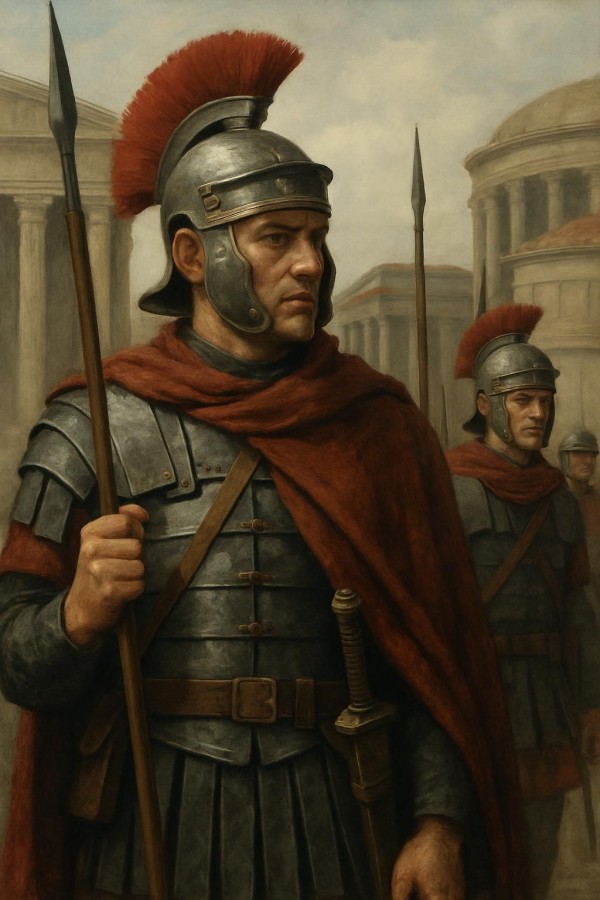
Iconography is sparse. Where images or late antique references exist, they hint at a figure in motion—alert, watchful, often half-concealed. The modern imagination, fed by fictional spies, sometimes inflates their profile; the historical record suggests a more prosaic but no less vital role.
Legacy and Comparative Perspectives
The operational logic of speculatores—light, mobile units blending local knowledge with military discipline—resonates across history. Comparisons to later medieval scouts, early modern couriers, and even modern reconnaissance units show convergent evolution: states and armies repeatedly develop similar solutions to the problem of incomplete information.
Their legacy informs studies of intelligence culture, civil-military relations, and the institutionalization of secrecy. Modern scholars draw lessons about how states legitimize surveillance, create accountability, and negotiate the ethical costs of security practices.
Conclusion: Reconciling Necessity and Restraint
Speculatores of the Republic represent a persistent paradox: necessary for the functioning of a powerful, expanding polity, yet potentially corrosive when deployed without restraint. Their story illuminates the tension between openness and secrecy that every political community must manage. By examining their practices, equipment, and social role, we gain not merely a picture of militarized reconnaissance but an insight into the Republic’s balancing act between military exigency and civic norms.
Understanding these scouts gives us a clearer lens for viewing the interplay of intelligence, power, and ethics in one of history’s most consequential polities.
Further reading suggestions:
- Monographs on Roman military institutions and intelligence practices.
- Studies on civil-military relations in late Republic politics.
- Comparative essays on reconnaissance and surveillance across eras.
요약: 공화정 시대의 스펙쿨라토레스는 군사적 정찰과 정보수집을 담당한 유닛으로, 현장 정보의 신속한 전달, 도심 감시, 그리고 필요시에는 정치적 목적을 위한 감시 활동까지 수행했다. 이들의 지위는 유동적이며 때로는 사회적 주변부에 위치했지만, 군사 작전의 성공과 정치적 권력의 유지에 필수적인 역할을 했다. 기록이 제한적이기 때문에 고고학적·문헌적 증거를 종합해 해석할 수밖에 없으며, 그 활동은 현대의 정보·감시 관행을 이해하는 데도 중요한 함의를 제공한다.
Tags:
#Speculatores #RomanRepublic #Reconnaissance #MilitaryIntelligence #RomanArmy #Surveillance #AncientWarfare #CivilMilitaryRelations #EspionageHistory #MilitaryCulture
댓글목록1
양현호님의 댓글