Republican Rome's Exploratores

 운영자
운영자
본문
Republican Rome's Exploratores
A deep, stylistic dive into the scouts of the Roman Republic — their methods, men, and the shadowy art of reconnaissance that shaped campaigns across the Mediterranean.
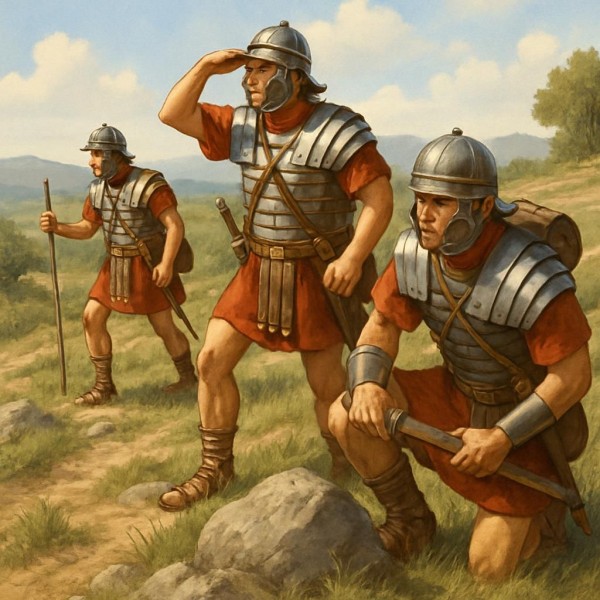
In the tumultuous centuries of the Roman Republic, the art of seeing before being seen was as valuable as iron and silver. The exploratores — scouts and reconnaissance detachments — operated at the edge of Roman knowledge, crepuscular figures who turned rumor into reliable intelligence. They were neither celebrated on triumphal arches nor chronicled in long ceremonial speeches; yet their reports, passed back to legates and consuls, could turn an operation from disaster to decisive victory.
Quick eyes, silent feet, and the patient memory of terrain — that fragile combination made the difference in countless Republican maneuvers.
Who were the Exploratores?
Roman scouting units were typically composed from a combination of legionary detachments, allied troops (socii), and specialized auxilia. Their composition was flexible; at times a commander would attach mounted velites or light cavalry units as forward eyes, while in other contexts, local guides and allied tribal scouts provided essential regional knowledge. The term explorator could denote a formal assignment or an ad hoc role taken by any soldier with local familiarity and the skill set required to move unseen and report accurately.
Note: Roman sources are often concise about scouts; much of what we reconstruct is inferred from tactical descriptions and logistical traces.
Functionally, exploratores performed a set of interlocking tasks: route reconnaissance, enemy observation, mapping of water sources and foraging zones, and the discreet verification of rumors. Their reports might be written on tabulae, delivered verbally, or signaled back by pre-arranged visual methods. In all cases the element of speed — of rapid return with usable facts — set the scouts apart from other auxiliaries.
At the tactical level, a legion could be preceded by a line of scouts who ranged up to several miles ahead. These men needed endurance, craft, and an instinct for danger. They could operate by day or night, employing silence, concealment, and natural cover to evade patrols. When mounted reconnaissance was possible, cavalry speculatores extended the radius of perception; on foot, small infantry parties slipped between hedgerows, monitored passes, and counted wagons and tents of opposing forces.
"He who knows the road first, often decides the day's fate." — paraphrased guidance from tactical manuals
Equipment and Signals
Exploratores traveled light. Their kit favored mobility: light shields, short swords, distinctive mounts where cavalry was used, and often local clothing or camouflage to blend with the environment. Signaling was crucial — fires on ridgelines, smoke, reflective metal, banners, and pre-arranged drum or horn patterns communicated warnings across distances. Where terrain allowed, simple mirrors or polished bronze might flash sunlight over valley floors; where forests closed, sound and discreet messengers achieved the same ends.
An explorator's value increased with his ability to read the landscape. Knowledge of river fords, hidden wells, and seasonal grazing patterns transformed an abstract map into a living strategic asset. This local intelligence could decide whether a commander would risk a flank march, set an ambush, or withdraw under cover of darkness.
Training and Recruitment
Recruitment for scouting roles often drew upon local recruits: allied tribesmen, mercenary trackers, and soldiers who had demonstrated initiative and discretion. Within legions, young men with aptitude for reconnaissance were sometimes rotated into scout duties to gain frontline observational experience. Training emphasized stealth drills, endurance marches, orientation and memory exercises, and the interpretation of enemy traces. Ancient commanders prized men who could compile quick sketches of terrain — rough maps that, while crude, communicated essential contours and choke points.
Tactics in Action
Many Republican campaigns hinged on information gleaned by scouts. A delayed scour of an ambush site could erase an army; a timely warning could spare a column from encirclement. Exploratores often laid the groundwork for either flanking maneuvers or carefully timed feints. Their reconnaissance informed not just battlefield choices but the rhythm of supply convoys and the selection of winter quarters. In short, life for the Roman command was measured in reports returned from the forward edge of empire.
Exploratores: the Republic's invisible reconnaissance corps.
Interactions with Other Units
Scouts were never isolated in their importance. They interlocked with cavalry, light infantry, and allied units. Communication channels extended from the explorator to the centurion and upwards to the legate or consul. A trustworthy scout's reporting could accelerate a march, trigger a countermarch, or enable a surprise attack. Conversely, poor reconnaissance was frequently noted as a proximate cause in Roman historiography for disasters — defeat by ambush, lost baggage trains, or encircled detachments.
Social Standing and Rewards
While scouts seldom received the public honors accorded to legionary commanders, they could be richly rewarded in other ways: promotion, monetary grants, or favorable postings. Many scouts were not Roman citizens; allied contingents who delivered decisive intelligence sometimes secured land grants or political leverage for their communities. In a society obsessed with visible glory, reconnaissance work remained a quiet path to practical reward.
Sources and Archaeological Traces
References to recon units are scattered across Livy, Polybius, and fragmentary military manuals. Archaeological finds, such as lightweight personal equipment, tracks of camp layouts, and the occasional sketch on reused tablets, contribute to a cautious reconstruction of scout activity. Because scouts left few monumental traces, modern scholarship reads their presence in the interstices: the tempo of marches, tactical outcomes, and the logistics recorded in campaign narratives.
Interpreting these traces requires cross-disciplinary work: combining classicists' textual analysis, battlefield archaeology, and experimental archaeology to understand movement rates, concealment techniques, and the limits of visual information in ancient landscapes.
Legacy and Lessons
The doctrines and instincts of Republican scouts echo in modern reconnaissance practice. The same fundamentals persist: local knowledge, speed, discretion, and a sharp eye for terrain. Modern militaries may employ technology unknown to the ancients, but the strategic value of accurate, timely reconnaissance remains unchanged. For historians and military enthusiasts alike, studying exploratores reveals how Rome stitched together empire — one observation at a time.
Conclusion: Exploratores were the Republic's forward senses — overlooked in the public record but decisive in practice. Their work was a blend of practical survival, improvisation, and disciplined reporting. To reconstruct their lives is to peer into the fine mechanics of how Rome learned the land it would come to rule.
Whether imagined as shadowy figures slipping through olive groves or mounted riders scanning ridge-lines at dawn, exploratores remind us that the exercise of power rests on knowledge. In the quiet notes of scouts and the brief lines of ancient annalists, we find a narrative of intelligence as the quiet architecture of victory.
댓글목록0