Lacydes and the Roman Republic: Skeptic Echoes in Senate and Assemblie…

 운영자
운영자
본문
When we say "Senate" and "assemblies" of the Roman Republic, most people picture toga-clad debates and long lists of magistrates — but there was also an intellectual atmosphere that filtered into political argument. This piece follows one unusual thread: how the Hellenistic skeptic Lacydes appears in the margins of Roman political thought, and what his presence can tell us about deliberation in the Senate and the popular assemblies.
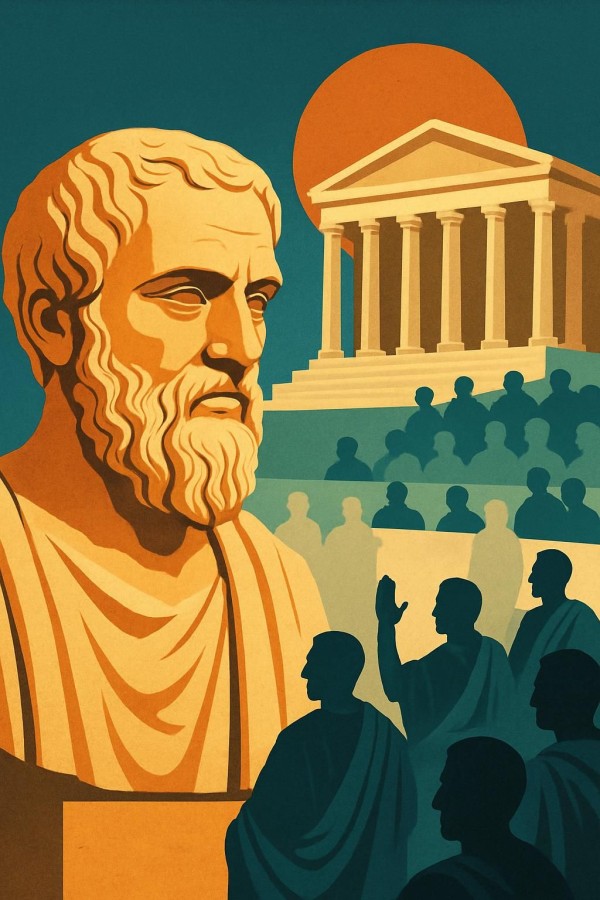
A quick portrait: who was Lacydes?
Born in Cyrene and later head of the Platonic Academy, Lacydes presided over the Middle Academy after Arcesilaus around 241–215 BCE. His school emphasized what we now call Academic skepticism — a cautious attitude toward claims of certain knowledge. Although none of his writings survive intact, classical sources record his role as a scholarch and his reputation for sharp, ironic anecdotes.
Short note: Lacydes taught in a garden called the Lacydeum, supported by patrons like Attalus I — a detail that shows philosophical teaching often moved in social circles that overlapped with elite politics.
"Skepticism in practice is not mere doubt; it is a disciplined restraint about what one claims to know."
Senate — deliberation by the few
The Roman Senate was neither a legislative assembly nor a democratic congress: it functioned primarily as an advisory and deliberative council composed of experienced magistrates and ex-magistrates. Its authority lay in prestige, procedural control of finances, diplomacy, and the shaping of policy through senatus consulta — recommendations that magistrates typically followed. This concentrated deliberation rewarded prudence, precedent, and rhetorical skill.
Senators were chosen largely from elite networks and were often the same men who populated the civic and military magistracies. That socio-political composition meant the Senate's debates were as much about managing elite consensus as about abstract truth. In that sense, there is a kinship with Academic skepticism: public claims had to be defended against practical exigency and the limits of certainty.
Consider the famous formula senatus consultum: it is not law until enacted via other mechanisms, yet it shaped outcomes. The Senate's influence came from argumentation, precedent, and the persuasive force of experience rather than from infallible reasoning.
A key takeaway: the Senate rewarded prudent suspension — not unlike a skeptic's hesitance to accept rash certainties.
Assemblies — mass decision and the rhetoric of persuasion
The Roman popular assemblies — the Comitia Centuriata, Comitia Tributa, and the Concilium Plebis — were the formal arenas where citizens voted on war, magistrates, and laws. They were organized by centuries or tribes and weighted in ways that privileged wealth and status, but they nevertheless provided a public forum for oratory and political theatre. Voting was by groups, not individuals, which shaped how politicians spoke to blocs rather than to solitary voters.
Assemblies required clear, forceful claims — a different ecological niche from the Senate's patient argument. Where the Senate valued cautious advice, assemblies rewarded decisive persuasion. The tension between these logics helps explain many constitutional frictions of the Republic.
Quick checklist: institutional differences that mattered
- Senate: advisory, elite, continuity of policy.
- Comitia Centuriata: military character, elected senior magistrates, voted by centuries.
- Comitia Tributa / Concilium Plebis: tribal voting, legislation and lower magistracies, plebeian voice.
The interplay between assembly rhetoric and senatorial restraint created political space for figures who could exploit public feeling or present calibrated skepticism depending on the audience.
Where does Lacydes fit in?
Lacydes never set foot in the Roman comitia as a legislator, but his school's skeptical temper provides a valuable lens. Hellenistic philosophy circulated among elites across the Mediterranean; Roman aristocrats read Greek teachers, patronized schools, and debated imported doctrines in private. The Academy’s insistence on intellectual modesty — to suspend judgment when evidence is insufficient — would have resonated with senators faced with ambiguous military intelligence or conflicting legal precedents.
Where assemblies demanded rhetorical boldness, a skeptical stance could be politically useful: it undercut overconfident rivals, cautioned against rushed policy, and framed compromise as reasonable restraint rather than weakness.
"To persuade the people, speak with conviction; to govern with prudence, practice careful doubt."
Practical echoes in institutions and rhetoric
Several institutional habits reflect a skeptical temperament: slow calendrical procedures for voting, repeated contiones (public assemblies for debate before a vote), and the Roman habit of referring difficult questions back to precedent, augury, or senatorial advice. These mechanisms functionally limited hasty decisions and cultivated a culture where withholding a final judgment could be politically persuasive.
In short: Lacydes supplies a useful metaphor for a Republic that balanced rhetorical conviction with institutional brakes.
Note: classical sources about Lacydes are fragmentary; modern reconstructions depend on later writers and secondary scholarship, so we should treat specific attributions with caution.
A practical reflection for readers
What does this mean for how you read political argument today? Think of Lacydes as a reminder that institutions encode epistemic habits. The structures of decision — who speaks, how votes are aggregated, what counts as evidence — shape whether societies favor brisk certainty or cautious deliberation.
Final emphasis: history shows that both modes are necessary; power without prudence breeds disaster, and prudence without decisive action breeds stagnation. How we navigate the balance is the enduring question.
For further reading on Lacydes and the Academy, see modern summaries and classical fragments; for institutions of the Roman Republic, authoritative overviews emphasize the different constitutional roles of the Senate and the various comitia.
Useful links in context: Lacydes of Cyrene (overview), The Roman Senate, Comitia and Roman assemblies.
Thank you for reading — if you'd like a short timeline of episodes where Roman political practice echoed philosophical caution, I can assemble one with primary-source excerpts and modern commentary.
댓글목록0