School of Rhodes: Sen. & Ass.

 운영자
운영자
본문
School of Rhodes: Sen. & Ass.
An ornate exploration of institutional memory, public rhetoric, and municipal pedagogy in the context of the Ancient Roman republic.
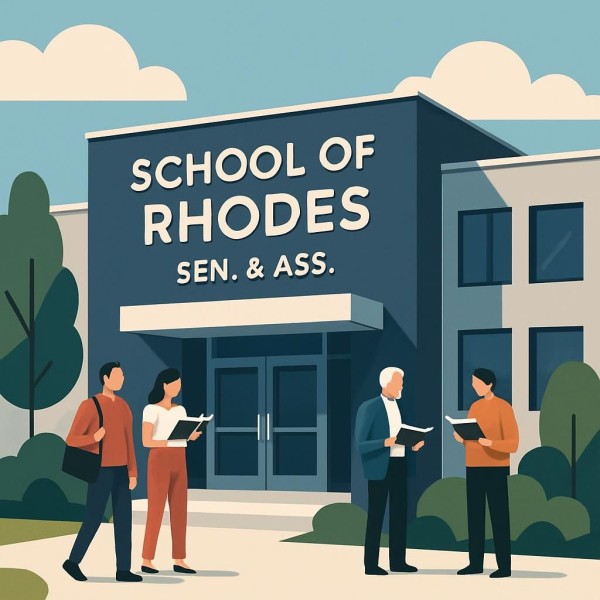
In the densely layered civic tapestry of the Ancient Roman republic, the School of Rhodes appears as both a symbol and a practical engine: a place where eloquence, civic memory, and juridical habit were taught to those who would stand before the senate and the assembly. It is tempting to think of this institution as purely rhetorical — a classroom of polished declaimers and flourished gestation — but the School of Rhodes operated at the interstice of education, policy, and public life. The historian, the magistrate, the plebeian representative: they all carried with them lessons refined under this roof, where method met tradition and performance fused with responsibility.
Teaching was not merely instruction; it was shaping civic character.
The curriculum of the School of Rhodes was eclectic yet precise. Students practiced forensic argument, studied precedent, and rehearsed deliberative rhetoric intended for assemblies where the voice of the crowd could shift policy as swiftly as a fleet changing tack. One lesson stands out in extant descriptions: the precision of address. A senator who mismeasured his cadence risked public ridicule; a tribune who misemployed a metaphor could lose a bill. Such stakes made the school's exercises rigorous: mock trials, rhetorical antiphony, and annotated readings of statutes and orations. Instructors insisted on the cultivation of memory through structured repetition and the disciplined use of exempla drawn from patrician lore and plebeian resistance alike.
Performance, then, was the test — not only of talent, but of civic fitness.
Students were trained to speak both to the senate and to assemblies in manners suited to each forum. The senatorial address prized measured argument and precedent, an appeal to tradition, nobility, and the prudent weighing of consequences. Conversely, the assembly called for passionate appeals, vivid anecdote, and rhetorical devices that could ignite popular feeling. The School of Rhodes taught how to calibrate: when to show restraint, when to strike, and how to translate legal reasoning into images the masses could grasp. It also taught ethics of persuasion, because hegemony through rhetoric demanded a structure of accountability; the citizen or magistrate without restraints became demagogue or tyrant.
Instructors often staged simulated assemblies with role-played senators, tribunes, and comitia. Judges wore no masks, but the stage became a microcosm of public life. Students learned to face interruptions, to answer interjection with wit, and to fold an opponent's charge back upon them using verbal jujitsu. These practices were not ornamental: they taught how institutions like the senate and popular assemblies could be preserved or reformed through speech. The school thus functioned as a laboratory for institutional resilience. A refined argument could slow a rash decree; a well-timed concession could avert civil rupture.
Rhetoric as a civic technology — deliberate, teachable, and morally freighted.
The pedagogy of the School of Rhodes also emphasized historical consciousness. Students absorbed the histories of key legislative struggles, read the speeches that had altered the republic's trajectory, and dissected the rhetorical choices that produced those outcomes. Memory was constructed with intention: dates, precedents, and canonical orations were stored through mnemonic devices and reconstructive performance. This cultivated a public memory that served as a stabilizing reservoir against impetuous leadership. A senator schooled in that memory was better equipped to argue for prudence; a tribune who knew the stories of plebeian victories could appeal to continuity rather than caprice.
Yet the school was not an ivory tower. Its spaces opened to the city: public readings filled forums, civic debates were staged in courtyards, and instructive plays depicted political dilemmas. The relationship between theory and practice was deliberate; students were expected, upon completion, to take the skills directly into public life. Many alumni became magistrates, legal advisors, orators, and administrative minds. Their careers reveal the school's centrality: governance in the republic was as much a function of performative fluency as of legal competence.
Some critics accused the School of Rhodes of cultivating artifice: that its graduates were too polished, too theatrical, and inclined to prioritize style over substance. Such critiques have merit, but they also underappreciate the balancing acts taught within its walls. The school's pedagogy insisted that style without moral grounding was empty; substance without persuasive form was ineffectual. In the volatile arenas where the senate and assemblies met, persuasive form was often the vector through which substance could travel. The school's defense was that rhetoric, disciplined and ethical, made deliberation possible.
Administratively, the School of Rhodes mirrored republican values. It was governed by councils of elder rhetors and civic patrons who maintained admissions that combined merit and civic duty. Scholarships enabled promising plebeian youths to receive training, preventing rhetorical education from being a purely aristocratic privilege. The presence of such scholarships suggests a deliberate attempt to democratize eloquence and to furnish the assembly with orators who could speak for diverse constituencies. This served both stability and pluralism: a more articulate populace could weigh arguments more faithfully, while institutions received a broader range of voices trained to address common concerns.
Thus the School of Rhodes became a crucible for civic talent — a place where speech, law, and public memory merged into practice.
The relationships forged between rhetoric and law at the School of Rhodes had long-term consequences. As graduates entered the senate and assemblies, they translated rhetorical habits into legislative procedure: the structuring of arguments, the use of precedent, and the calibration of public appeal became routinized. Over generations, this created a culture in which careful oration and an appeal to shared memory functioned as informal norms that constrained excess. In moments of crisis, these norms could be mobilized to preserve the republic's framework; in moments of stagnation, they could be deployed to argue for reform. The school never claimed to be a panacea, but as a persistent institution it influenced the republic's capacity for self-critique and adaptation.
Legacy: institutions that teach how to speak well shape how a polity decides.
Contemporary readers may look to the School of Rhodes for lessons about modern civic education. If we accept that public argument is a craft, then the deliberate formation of citizens — through apprenticeship, practice, and ethical instruction — is crucial to a healthy public sphere. The dual forums of senate and assembly in the republic offer a model for differentiated public spaces: institutions that prize deliberation and those that respond to popular energy must both be served by a citizenry trained in the arts of reason and persuasion. The School of Rhodes invites us to reconsider civic pedagogy not as an ancillary cultural luxury, but as foundational to democratic resilience and governance.
Epilogue
The story of the School of Rhodes is ultimately a study in transmission: of techniques, of values, and of institutional memory. It reminds us that political forms survive not only through laws and constitutions, but through practices taught and embodied by people who stand before others and speak. The power of an oration to move a forum, to steer a vote, or to reshape debate is not incidental. It is the lived mechanism of deliberative republics, and institutions that cultivate that power responsibly have always occupied a central place in civic life.
Author's note: This essay synthesizes a variety of historical models and theoretical reflections to imagine the role played by pedagogic centers in classical civic life. The intent is interpretive rather than documentary.
마지막으로, 이 글의 핵심을 간단히 정리하면 다음과 같습니다. 로마 공화정의 맥락에서 스쿨 오브 로즈는 수사학적 훈련과 공적 기억의 보존을 통해 공적 발화와 제도적 회복력을 동시에 길러낸 기관으로 그려진다. 의회와 민회라는 서로 다른 공론장의 요구를 배우고 조율하는 교육은 단순한 기교가 아니라 시민적 책임과 제도적 안정성의 핵심이었다. 이 기관의 전통은 오늘날의 시민교육과 공적 담론 형성에도 유의미한 시사점을 준다.
Tags: #SchoolOfRhodes #Senate #Assembly #Rhetoric #CivicEducation #PublicMemory #Oratory #RepublicanInstitutions #Pedagogy #Governance
댓글목록1
노하진님의 댓글