Law and Power: Concilium Plebis in Ancient Rome

 운영자
운영자
본문
When you hear about Ancient Rome, images of grand emperors and mighty legions often come to mind. But the republic that came before the empire had its own unique ways of balancing power and representing the people. One fascinating institution that played a key role in that early political wrestling match was the Concilium Plebis. Though it might sound a bit obscure at first, this assembly helped shape what democracy and law meant in Rome, especially for the common folk—the plebeians.
So what exactly was the Concilium Plebis? Think of it as the political home court for the plebeians, the non-aristocratic citizens of Rome. Unlike the patricians, who were Rome's elite families, plebeians had limited influence—at least initially. To push back against this imbalance, the Concilium Plebis emerged as a sort of people's assembly, where plebeians could gather, debate, and pass resolutions that directly affected their lives.
Unlike the more traditional Senate, dominated by patricians, the Concilium Plebis was exclusively for plebeians. That means no patricians allowed—this was their space to speak out. And it gave them what was called plebiscita, decisions or laws passed by the assembly. In the early days, these laws only applied to plebeians, but over time, their authority grew—some even coming to bind all Romans. This shift was a game changer.
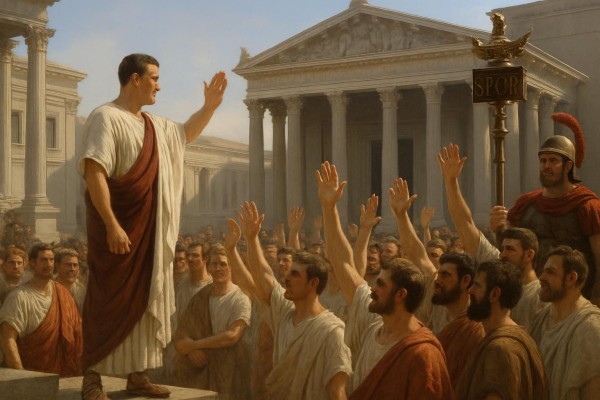
What’s interesting is how the Concilium Plebis developed alongside other political bodies. The Roman Republic’s government was a complex puzzle of assemblies, councils, and magistrates. The Tribunes of the Plebs had emerged as well—officials elected to protect the plebeians’ interests. They wielded significant veto power and could convene the Concilium Plebis, making the assembly a real force to reckon with. These tribunes were kind of like political guardians, ensuring plebeian voices weren’t drowned out.
But it wasn't all smooth sailing. The struggle between patricians and plebeians was intense, almost like watching a tug of war that defined Rome’s political identity. Have you ever felt caught between different groups at work or school? That’s a smaller-scale version of what Romans experienced. The plebeians’ fight wasn’t just about having a say; it was about survival, fair treatment, and justice in a society rigged against them.
Over time, the Concilium Plebis showed its power by pushing laws that gradually dismantled patrician privileges. The famous Laws of the Twelve Tables, for example, were a direct response to plebeian demands for transparency and fairness. And the assembly didn’t just pass laws—it symbolized a larger shift in Roman identity. No longer was Rome purely under aristocratic control, but a republic where different social groups negotiated power.
Another captivating aspect is how the Concilium Plebis allowed plebeians to influence legislation without formally being part of the Senate, which retained its patrician identity for quite a while. It’s like having a powerful voice on the sidelines, gradually changing the game through collective action and persistence. This shows us that political power isn’t always about sitting at the top table—sometimes it’s about building institutions that let more voices be heard.
Naturally, the authorities were wary of a plebeian assembly having such clout. The patrician class didn’t give up control easily, and there were periods when tensions flared dangerously close to open conflict. But the fact that the Concilium Plebis endured and expanded its influence says something about Rome’s political flexibility. To manage such friction, the republic had to find ways to accommodate rising demands for inclusion.
If you think about modern democracy, the Concilium Plebis shares some DNA with today’s grassroots movements and assemblies—in the sense that it gave ordinary people a structured way to organize, argue, and impact governance. Though the Roman system was far from perfect, especially by today’s standards, it planted seeds of popular participation that influenced political thought for centuries.
Now, some might wonder: why should the Concilium Plebis matter to us today? Well, it’s a reminder that power structures are not fixed. What starts as a marginalized group’s assembly can evolve into a central force that reshapes society’s rules. It prompts us to consider our own communities—where are the “plebs” today, and how do they find their voice? What lessons can we take from Rome’s rocky, inspiring political journey?
In the end, the story of the Concilium Plebis in Ancient Rome isn’t just about old laws and dusty assemblies—it’s about how people strive to claim their rightful space in the political arena. It tells us something timeless: the balancing act between law and power is always a work in progress, shaped by those who dare to speak up.
고대로마 공화정 시기의 콩틸리움 플레비스(평민회)는 평민들이 자기 목소리를 내고 권리를 쟁취하는 중요한 정치 기구였다. 초기에는 평민만의 집회였으나 점차 모든 로마 시민에게 영향을 미치며 권력의 균형을 바꾸었다. 이 제도는 권력 구조가 고정되지 않고 변할 수 있음을 보여주며, 오늘날 우리 사회의 다양한 정치 참여와 연결해 생각해볼 만한 의미를 지닌다.
댓글목록0