The TwelveTables and the Making of Roman Law

 운영자
운영자
본문
Why a set of twelve bronze rules changed a republic
In the mid-fifth century BCE, Rome produced what later generations called the Laws of the Twelve Tables: a compact, publicly posted code that fixed previously unwritten customs into a visible legal order. The formal dating is conventionally 451–450 BCE, when the Decemviri completed the text and the Roman Forum received the public display. ([britannica.com](https://www.britannica.com/topic/Law-of-the-Twelve-Tables))
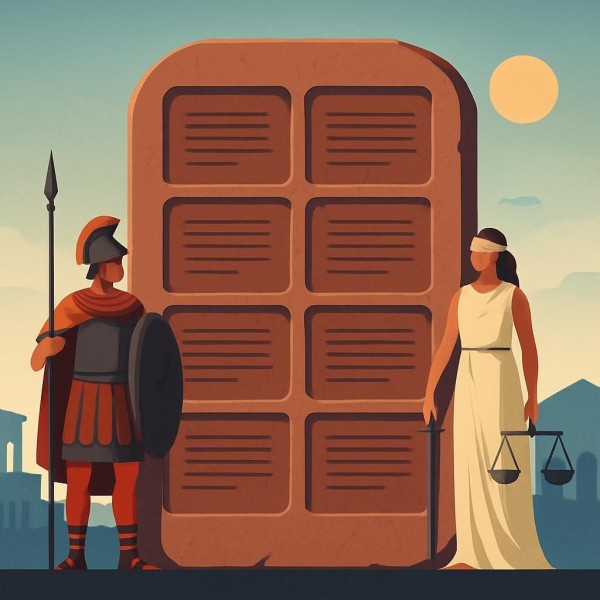
The move mattered not because each clause was humane or comprehensive, but because the TwelveTables made law readable and contestable — no longer the private preserve of patrician pontiffs. This shift shaped procedures for courts, property, family relations, and public offences, and it anchored a legal tradition that Roman jurists later invoked for centuries. ([britannica.com](https://www.britannica.com/topic/Law-of-the-Twelve-Tables))
Think of the TwelveTables as a crossroads where custom, politics, and practicality met: plebeian pressure for transparency, patrician interest in preserving status, and growing commercial complexity that demanded clear rules. The result was not liberal reform in a modern sense, but a durable foundation for Roman civil procedure. ([britannica.com](https://www.britannica.com/topic/Law-of-the-Twelve-Tables))
Key term for this piece: TwelveTables.
What the code contained (a practical sketch)
The surviving fragments and later quotations show a strongly procedural and practical code: rules on summons and trials, debt enforcement, paterfamilias authority, guardianship, property boundaries, delicts (torts), sacrilege, and public crimes. Many provisions read like court-form rules or municipal ordinances rather than moral sermons. ([sourcebooks.web.fordham.edu](https://sourcebooks.web.fordham.edu/ancient/12tables.asp))
Snapshot: Table examples — procedure (Tables I–II); debt (III); family/paternal power (IV–V); property and possession (VI–VII); torts and public order (VIII–X); social/constitutional supplements (XI–XII). For readers who want the raw text excerpts, an accessible edition of fragments can be found in the Fordham Sourcebook. Fordham Sourcebook: The Twelve Tables. ([sourcebooks.web.fordham.edu](https://sourcebooks.web.fordham.edu/ancient/12tables.asp))
Some clauses are stark by modern standards — harsh penalties for theft or strict paterfamilias powers — yet others reveal commercial sophistication (contracts, usucapio, and inheritance rules) that reflect an increasingly monetized Roman economy. These tensions explain why the TwelveTables could be at once conservative and pragmatically advanced. ([britannica.com](https://www.britannica.com/topic/Law-of-the-Twelve-Tables))
How the TwelveTables were produced — a brief scene
Tradition places the creation in the conflict of the orders: commissions of ten men (decemviri) drafted laws under political pressure, and the second decemvirate completed the pair of final tables. Ancient narrators mention embassies to Greek cities to study legislation, but modern historians debate the extent of direct borrowing. What matters is the political bargain: written law curbed elite arbitrariness while codifying many elite prerogatives. ([britannica.com](https://www.britannica.com/topic/Law-of-the-Twelve-Tables))
Short pause: why does the method of composition matter? Because it tells us whether the TwelveTables were a top-down imposition, a negotiated compromise, or a practical manual for magistrates. The answer is: a bit of all three.
"Though all the world exclaim against me, I will say what I think: that single little book of the Twelve Tables...surpass the libraries of all the philosophers." — Cicero (excerpt preserved in later sources). ([sourcebooks.web.fordham.edu](https://sourcebooks.web.fordham.edu/ancient/12tables.asp))
Note of caution: most of the original tablets are lost and what survives are quotations, later commentaries, and modern reconstructions. Interpretations must therefore weigh literary transmission and juristic rewriting. For a compact discussion of textual survival and later usage, see the Encyclopaedia Britannica entry. Britannica — Law of the Twelve Tables. ([britannica.com](https://www.britannica.com/topic/Law-of-the-Twelve-Tables))
Legacy: procedure, jurists, and modern echoes
The immediate legal effect of the TwelveTables declined as Roman law matured, but their symbolic authority persisted. Republican jurists quoted them, imperial collections (and ultimately Justinian's Corpus Juris) treated them as ancestors of later principles, and students of law still study their fragments to trace procedural origins. The Roman insistence on written rules for rights and process influenced later European legal thought and, indirectly, modern legal concepts.
How should modern lawyers and historians use the TwelveTables? As a laboratory: they show how law organizes a society's priorities — family authority, property security, and public order — and how written law can both empower and constrain citizens. ([britannica.com](https://www.britannica.com/topic/Law-of-the-Twelve-Tables))
Practical takeaways for legal study
- Codification can increase transparency even when the content is conservative.
- Procedural rules shape access to justice more than lofty principles do.
- Fragments and later commentary require source-criticism for reconstruction.
- Comparative study (e.g., Greek laws, Roman jurists) clarifies transmission routes and influence.
Want the primary excerpts? The Fordham Internet Sourcebook provides a readable, modernized rendering of the surviving lines; it is an excellent starting point for classroom discussion or archival comparison. Read the excerpts at Fordham. ([sourcebooks.web.fordham.edu](https://sourcebooks.web.fordham.edu/ancient/12tables.asp))
In short: the TwelveTables are less a finished constitution than a hinge — a visible, litigable body of rules that anchored Roman civil practice and allowed subsequent generations to argue, adapt, and institutionalize law. ([britannica.com](https://www.britannica.com/topic/Law-of-the-Twelve-Tables))
Final thought: when you read legal fragments from the past, ask both "what did this do?" and "who benefited?" The answers often differ — and that difference is where historical insight lives.
Further reading & exploration: Fordham Sourcebook; Encyclopaedia Britannica; Livius—good entry points for primary fragments and analytical overviews. ([sourcebooks.web.fordham.edu](https://sourcebooks.web.fordham.edu/ancient/12tables.asp))
댓글목록0