Lorica Squamata: Republic

 운영자
운영자
본문
Lorica Squamata: Republic
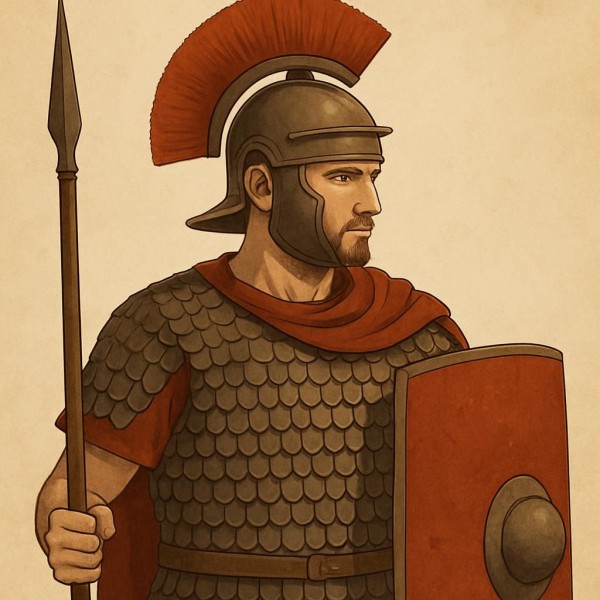
An in-depth exploration of the scale armor that served Rome in its formative centuries.
Introduction: The Armor of a Rising Power
The lorica squamata is often described in succinct museum labels: scale armor, a patchwork of small metal plates fastened to a fabric backing. But that terse definition barely begins to convey the technique, labor and cultural meaning wrapped up in those overlapping scales. During the era of the Roman Republic, as Rome expanded from a city-state to a dominant regional power, practical choices about equipment reflected military doctrine, economic resources and artisanal skill. In this essay I will examine the technology, manufacture, tactical use and later legacy of lorica squamata, paying special attention to the period when the Republican army set patterns that would influence imperial legions for centuries.
What Is Scale Armor?
At its core, scale armor consists of many small, usually metal, scales overlapped and sewn or riveted to a backing of leather or textile. The individual scales might be shaped like leaves, teardrops, or tiny shields. Unlike mail, which is made of interlinked rings, scale armor relies on the integrity of each scale and the manner in which it is attached to a substrate. That difference produces distinct performance characteristics: scale resists crushing blows and disperses slashes across multiple scales, but it may be vulnerable at the attachment points if the underlying fabric is compromised.
Term note: “lorica” is the Latin word broadly used for body armor; “squamata” refers to scales.
Construction and Materials
Construction of lorica squamata demanded several distinct crafts: metalworking to cut and shape scales; leatherworking to prepare the backing and fastenings; and stitching to attach scales in precise rows. Metals ranged from bronze and brass to iron, depending on budget and availability. Bronze offered corrosion resistance and a decorative sheen, making it popular for elite or ceremonial sets; iron, often cheaper and stronger in certain dimensions, served more utilitarian purposes. Each scale might be pierced with one or more holes and sewn with thread or paired with rivets that passed through the backing. Artisans often finished edges by folding or rounding scale rims, which reduced the chance of tearing the substrate.
"The visible surface of the cuirass could be as much about display and identity as protection."
Many surviving scales recovered from graves or hoards show traces of gilding, tinning, or painted accents. Such finishes were not purely decorative; they also provided a thin barrier against corrosion and made the soldier appear brighter in sunlight — an effect that could intimidate opponents or contribute to unit cohesion when worn en masse.
Variations and Regional Styles
Scale armor existed in many cultural contexts before and alongside Rome. Within Roman contexts of the Republic, several stylistic variations appear: long rows of narrow scales, broader overlapping plates, and scales augmented with decorative bosses or punched motifs. Some examples integrate leather scales with metal, and others combine scale panels with mail sleeves or pteruges (the leather strips hanging from the skirt). Regional workshops — for instance in Etruria, Campania or the Greek east — left subtle signatures in scale shape, riveting technique and backing materials. These differences help archaeologists map trade links and workshop mobility across the Mediterranean.
Comparative note: lorica squamata vs. lorica hamata vs. lorica segmentata — each has advantages that made it suitable to different roles and budgets.
Tactical Role in the Republic Army
In Republican formations, armor choice reflected both status and function. Wealthy citizens might equip themselves with finely made scale armor as a sign of rank or civic pride. Commanders and cavalry often preferred scale for its aesthetic and perceived prestige. On the other hand, heavier infantry sometimes chose different systems depending on the campaign. Scale's ability to deflect glancing blows and protect against edge weapons made it valuable in close-combat situations. However, because the backing could be compromised by concentrated thrusts or fire, commanders had to consider terrain, enemy weapons and logistical constraints when outfitting units.
- Pros: good slashing protection, impressive visual effect, modular repair.
- Cons: potential weak points at stitch/rivet points, heavier when wet, time-consuming to produce.
Logistics: an army's ability to maintain scale armor depended on supply lines and skilled armorers traveling with or near the force.
Manufacture: Workshops and Techniques
Evidence from hoards and grave goods suggests production ranged from small artisanal shops producing bespoke pieces to larger, semi-industrial operations supplying units or civic officials. The process likely unfolded in stages: blanking scales from sheet metal; shaping and possibly punching holes; edge-finishing; and finally attaching scales to the backing in horizontal rows. Attachment methods vary: single-hole sewing, paired-hole rivets, or even use of rivets combined with leather strips. Tools included anvils, punches, shears and awls, many of which appear in tool kits excavated from Roman settlements.
The labor cost was nontrivial. A well-crafted lorica squamata demanded hundreds to thousands of individual scales, each touching several neighbors. That investment shaped who wore the armor: elite troop types and wealthy officers were better able to acquire ornate sets, while common legionaries might receive simpler, mass-produced configurations if resources permitted.
Archaeological Record and Preservation
Scale armor survives poorly in many burial contexts because organic backing decomposes, leaving isolated metal scales in the soil. Archaeologists therefore reconstruct garments from dense clusters of scales or from iconographic sources such as coinage, reliefs and statues. Remarkably, metal-dense environments and anaerobic tombs have yielded near-complete panels of scales, allowing conservators to study attachment patterns, corrosion layers and traces of pigments. These finds inform conservation strategies, which must balance stabilization of corroded iron and the retention of any original pigment or gilding.
Note: Inappropriate cleaning or aggressive mechanical cleaning can destroy delicate surface finishes; modern conservation emphasizes minimal intervention.
Iconography and Social Significance
Scale armor appears in Roman visual culture not only as utilitarian kit but as an emblem of authority. Reliefs of generals, triumphal imagery and funerary monuments frequently depict ornate scale cuirasses embellished with bosses, mythological scenes or symbolic attachments. These decorative motifs served multiple purposes: they associated the wearer with martial virtue, displayed wealth and fostered collective identity within a unit or civic office. For many citizens, owning or commissioning scale armor was a way of publicly broadcasting status.
Caveat: artistic depictions are stylized and must be cross-referenced with archaeological evidence before firm conclusions about real-world design are drawn.
Comparisons: Why Choose Scale Over Mail or Plates?
The choice between scale, mail and segmented plate armor involved trade-offs in cost, weight distribution, repairability and protection characteristics. Mail (lorica hamata) offers superb flexibility and excellent defense against puncture if rings remain intact, while segmentata offers rigid coverage and efficient weight distribution. Scale sits between these systems: it is less flexible than mail but more adaptable to complex shapes than plate segments. For commanders seeking a balance of mobility and display, or for cavalry who prized appearance and slashing protection, scale was often the preferred solution.
- Scale: good slashing defense, variable puncture resistance, strong visual impact.
- Mail: flexible, durable against puncture, heavy in aggregate.
- Plate: rigid, strong against blunt force, complex to manufacture.
Maintenance, Repair and Logistics
Maintaining scale armor in the field demanded routine attention. Loose scales required re-stitching, and corroded pieces might be removed and replaced. Armorer detachments likely carried spare scales and patching materials. In cold or wet climates, organic backings could rot, necessitating periodic replacement. Such upkeep influenced campaign planning: long marches without access to workshops could degrade the protective quality of the unit's equipment, while a well-serviced cuirass could remain effective for decades.
Practical tip for modern reenactors: treat leather backings to prevent rot, and avoid abrasive polishing that removes patina and historical traces.
Modern Reproductions and Experimental Archaeology
Contemporary reenactors and experimental archaeologists have reproduced lorica squamata using historical techniques. These experiments provide data on weight distribution, mobility restrictions, and defensive performance under simulated combat conditions. Reproduction efforts also illuminate lost production economies: craftsmen report that making a single cuirass demands intensive labor and a reliable source of metal sheet, confirming historic patterns of selective distribution of such armor across social classes.
Findings: a well-made scale cuirass can afford the wearer both impressive protection and agility, provided maintenance is regular.
Conclusion: Legacy and Lessons
While the famed segmented lorica segmentata is often associated with the image of Imperial Rome, scale armor played a subtle but persistent role across centuries, especially in the earlier Republican period and among cavalry and specialized troops. Its manufacture reveals networks of craft specialization, trade in metalwork and the importance of visual display in martial contexts. For historians and reenactors alike, lorica squamata offers a lens into how communities invested resources in protection, identity and military effectiveness.
If you study ancient arms and armor, scale cuirasses reward a close look: in the overlap of each tiny plate you can read stories of skill, economy and human experience.
Acknowledgments & Sources
This overview builds on field reports from Mediterranean excavations, conservation case studies and published experiments in historical armor reproduction. Where direct primary finds are absent, iconographic sources — coins, reliefs and funerary monuments — provide supporting detail. For readers seeking primary scholarship, museum catalogues and peer-reviewed journal articles on Roman armament remain indispensable.
Tags
Lorica Squamata Roman Republic Scale Armor Roman Military Armor Construction Archaeology Roman Legions Bronze Scales Lorica Hamata Ancient Metallurgy
Short Korean Summary
로리카 스콰마타는 작은 금속 비늘을 가죽이나 직물에 붙여 만든 방어구로, 로마 공화국 시기 군대에서 중요한 역할을 했습니다. 각 비늘은 여러 개의 구멍으로 고정되거나 리벳으로 연결되어 방어력을 높였고, 재료와 마무리 방식에 따라 장식성과 내구성이 달라졌습니다. 제작에는 금속 가공, 가죽 다루기, 정교한 바느질 기술이 요구되어 비용이 높았고, 이는 착용자의 사회적 지위를 반영했습니다. 고고학적 발굴과 재현 실험은 이 방어구의 실용성과 제작 경제를 보여주며, 보존 상태와 회복을 위한 신중한 보존 처리가 필요함을 시사합니다.
댓글목록0