Praefectus Fabrum: Roman Republic Military Engineers

 운영자
운영자
본문
Praefectus Fabrum: Roman Republic Military Engineers
Unveiling the Brilliance of Ancient Roman Engineering Leadership
Introduction
In the tapestry of military history, the republic's armies were not just defined by their discipline and martial prowess, but also by their ingenuity. Among the most remarkable unsung heroes of the military machine was the Praefectus Fabrum, the commanding officer devoted to military engineering. As warfare evolved, so did the imperative for engineering mastery—building bridges, constructing fortifications, and crafting siege engines were all vital to sustaining campaigns and winning wars.
Who Was the Praefectus Fabrum?
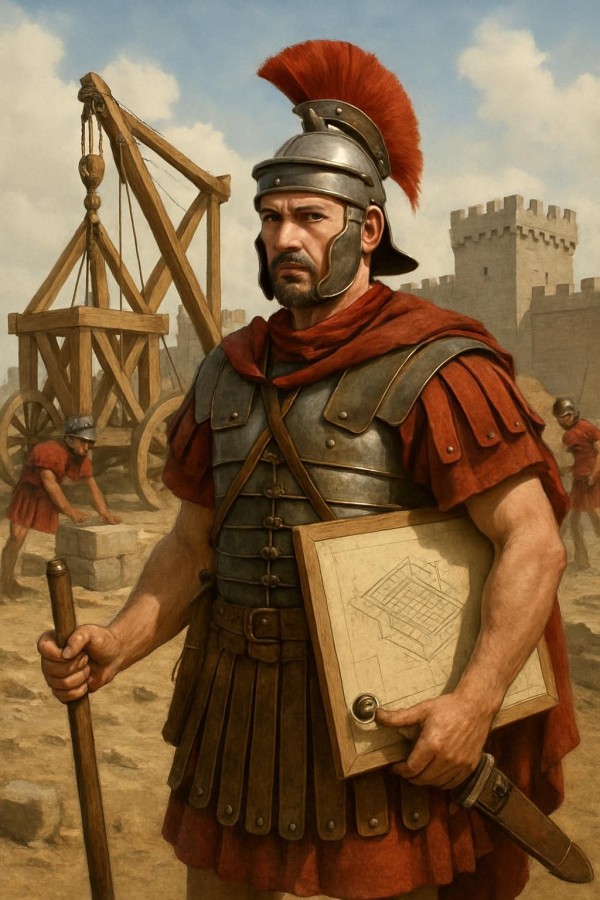
The post of Praefectus Fabrum, sometimes simply called the chief of engineers, was a crucial yet often overlooked staff position in the ancient army. Unlike elected magistrates, this was an appointed role: generals would select trusted individuals with proven technical skill, organizational acumen, and steadfast loyalty.
Their principal responsibility was the oversight and coordination of the fabri, or engineers, craftspeople, and laborers attached to each legion. The Praefectus Fabrum answered directly to the general or legate, managing all matters pertaining to siege works, field camps, pontoon bridges, and even battlefield repairs.
Origins and Evolution of the Role
The office most likely originated from the necessity to manage increasing numbers of specialists as military expeditions became more complex in the middle republican period. From the late 3rd century BCE, the reliance on dedicated engineers grew steadily. Evidence of their importance is found even in the earliest Latin military texts, such as those by Polybius and Livy, who recount bridges and siege works that would require expert coordination.
Duties and Technical Mastery
The Praefectus Fabrum wore many hats. Their purview extended to every aspect of military engineering:
- Projecting and supervising the construction of camps, including defensive ditches (fossa) and palisades (vallus)
- Erecting temporary bridges over rivers during famously rapid marches
- Organizing siege operations, such as building rams, towers, and artillery
- Maintaining and repairing military mechanical devices in the field
- Supervising the legion’s blacksmiths and carpenters
- Managing logistics for construction supplies, like timber, stone, and iron
The Fabri: Legionary Artisans and Laborers
Each legion possessed at its heart a group of specialist soldiers: the fabri. Far from mere manual laborers, these troops included carpenters, blacksmiths, masons, and mechanics, carefully selected for their expertise. The Praefectus Fabrum would organize their efforts not only in battle but in the relentless roadbuilding and fortification that underpinned Rome’s military dominance.
When a siege was underway, the Fabri became a creative war engine—fabricating towers, catapults, battering rams, and incredible mobile defenses. During marches, they repaired wagons, constructed camps and fortifications, and ensured every legionary’s gear was battle-ready.
Praefectus Fabrum in the Field
In every military campaign, the Praefectus Fabrum functioned like a chief operations officer of war. Whether traversing the wilds of Gaul, scaling the Alps, or enduring sieges in the East, he led teams working day and night under the harshest conditions. His strategic importance is detailed in the accounts of Caesar, who records the speedy bridge-building across the Rhine and the construction of formidable siege works at Alesia—feats possible only under expert engineering leadership.
The Praefectus Fabrum was often at the center of innovation, adapting enemy technology or inventing bespoke solutions to daunting tactical challenges. Their legacy is etched into the earthworks, roads, and field fortifications that have survived centuries.
A Role of High Distinction
Holding the title of Praefectus Fabrum was not just a technical appointment—it was a badge of distinction. Many holders went on to higher magistracies, their experience commanding engineering units proving invaluable in the public works and city planning of peacetime. Some, such as Marcus Agrippa, began their ascent through this staff post, blending engineering skill with military audacity.
Legacy in Roman Innovation
The achievements of Rome’s engineers and their commanding officers echo through history. Thanks to the Praefectus Fabrum, the republic’s armies boasted a unique flexibility. Their ability to adapt the environment to their strategic needs—laying roads, bridging rivers, besieging cities—was not just a technical triumph, it was a society-wide assertion of Roman power and ingenuity.
The systematic approach to engineering organization foreshadowed the far more specialized divisions of the imperial armies, and the very concept of military engineering branches in later western and global militaries draws inspiration from the Roman model.
Closing Thoughts: The Unsung Architects of Power
The immense reach and enduring infrastructure of ancient Rome would not have been possible without the brilliance and leadership of officers like the Praefectus Fabrum. As you walk a Roman road, gaze upon ancient ruins, or imagine the thunder of legionary camps being raised overnight, remember these master builders—the architects of Roman strength, ingenuity, and history.
Keywords:
요약 (Summary in Korean)
Praefectus Fabrum는 고대 로마 군대에서 공병들을 총괄했던 중요한 역할로, 전쟁에서 다리 건설, 성채 세우기, 각종 기계장비 제작 등 다양한 기술적 임무를 수행했습니다. 이 역할은 로마의 군사적 성공과 인프라 발전에 필수적이었으며, 로마군의 독특하고 효율적인 운용 방식을 대표합니다.
댓글목록1
최시호님의 댓글