Military: TribunusMilitum in Roman Republic

 운영자
운영자
본문
Military: TribunusMilitum in Roman Republic
The office of the TribunusMilitum in the Ancient Roman Republic blends martial command, social maneuvering, and political apprenticeship. Not merely a unit commander, a TribunusMilitum was an agent of Rome’s peculiar balance between civic institutions and battlefield exigency. This blog explores how the role functioned at different stages of the Republic, how it shaped military organization, and why its holders sometimes tipped the Republic toward confrontation rather than compromise.
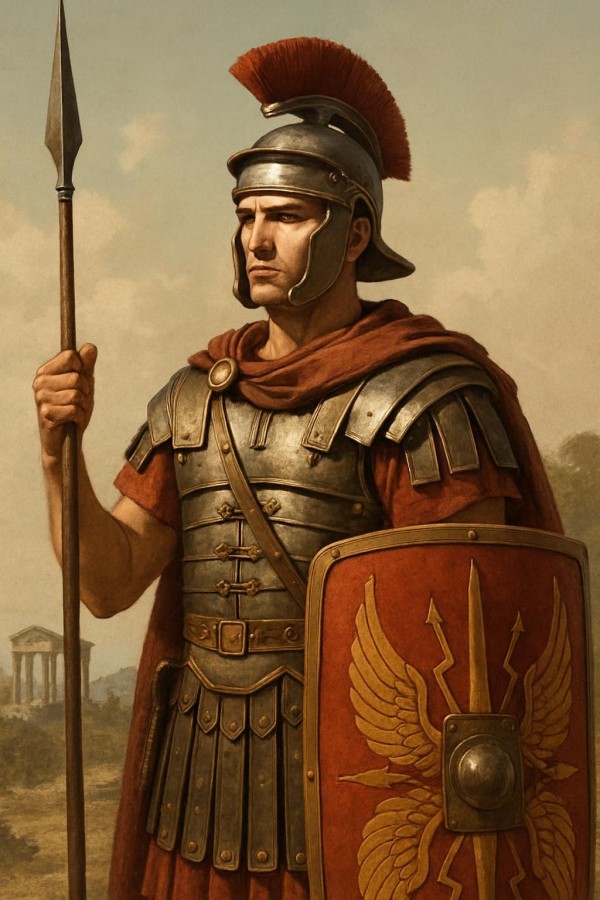
At its core the TribunusMilitum (military tribune) was a flexible post: younger aristocrats gained command experience, equestrian officers could exhibit professional competence, and emergency situations could elevate commanders beyond ordinary expectations. The title appears early in Rome’s military chronicles, evolving in duties from archaic, near-tribal leaders of levy units to officers integrated into the legion’s structured chain of command.
Recruitment and selection for Tribuni varied. In some periods they were elected, in others appointed by consuls or generals who bestrode both civic and military spheres. The office functioned as an apprenticeship for higher magistracies, a staging area for political ambitions, and occasionally as a sinecure for men of means. For historians, understanding who became TribunusMilitum helps map familial networks and patronage that sustained Republican governance.
Organizationally, Tribuni served as mid-level officers inside a legion, commanding cohorts or acting as deputies to legionary commanders. A legion could have several military tribunes, each with differentiated responsibilities: one might oversee supply and logistics, another discipline, another tactical deployment. While not the ultimate authority on campaign decisions, Tribuni often exercised decisive local command when senior leaders were distant or casualties thinned the command structure.
Training Ground for Roman Leadership
The TribunusMilitum was as much about learning how to lead as it was about leading. Service taught logistics, command presence, and the grim arithmetic of casualties. A successful stint could be a springboard to a quaestorship or even higher. Yet the very mixing of political ambition with military command seeded tensions: officers returned from campaigns with loyal troops and public prestige, which could be converted into political pressure at Rome.
The social composition mattered. While patrician scions often occupied tribunician posts, the Republic’s expanding needs allowed plebeian and equestrian officers to distinguish themselves. The rise of professional soldiers and client relationships between commanders and their men gradually undercut the old Roman civic model where soldiers returned from campaigns and shed their military identity to resume civilian life.
Operational Roles and Tactical Influence
On the battlefield a TribunusMilitum could be the decisive actor. Sharp tactical judgment in a localized engagement—holding a hill, ordering a flanking maneuver, or stabilizing a wavering line—could determine a battle’s outcome. Tribuni were also responsible for morale, punishment for misconduct, and implementing strategic orders from consuls and legates. The multiplicity of tribunes in a single legion required careful coordination, making personal authority and communication essential skills.
Logistics and camp administration were another dimension. Roman success was built on supply discipline and fortified marching camps—areas where Tribuni often excelled. Ensuring forage, food, and orderly encampments allowed Roman forces to outlast adversaries. In many campaigns it was the competence of mid-level officers, rather than grand strategy, that preserved the army’s fighting capacity.
Political Aftereffects of Military Distinction
Military success translated into political capital. Veterans vouched for their commanders, popular support could be parlayed into votes or street-level influence, and victories enhanced an officer’s reputation among Rome’s elite. This dynamic created a friction point: when command, popularity, and political ambition combined, some TribuniMilitum and their successors turned their military authority into a political weapon, pressing the Republic’s fragile norms.
Military: TribunusMilitum and the Threshold of Warlordism and Civil War (군벌과 내전의 문턱)
The hyperlink above anchors a thematic junction: how officers like TribunusMilitum could be at once defenders of Rome and instigators of its strife. The Republic’s military-political feedback loop created conditions where commanders with personal followings might defy civic restraint. The post of military tribune thus sits at the crossroads of honorable service and the temptation to exploit arms for factional ends. When loyalty to a leader supersedes loyalty to the Senate or the law, the Republic found itself perilously close to civil conflict.
Consider notable careers where early tribunician service fed later ambitions: men who won battlefield esteem would later demand triumphant honors, seek office by relying on veterans, or, in the most extreme cases, seize power. The memory of these trajectories sharpened Roman anxieties about concentration of military loyalty, provoking laws and customs meant to separate armed command from domestic power plays—but law and custom were often insufficient when the stakes were high.
Comparative Perspectives and Lessons
Comparing the TribunusMilitum to later professional officers in other cultures underscores universal tensions: military competence gives rise to political influence; veterans form durable bonds with commanders; institutions must devise safeguards to prevent martial power from eroding civic order. Rome’s solution—traditions, limited terms, and republican ritual—worked unevenly. When the Republic’s expansion created long campaigns and distant commands, the centrifugal force of personal loyalty intensified.
The TribunusMilitum remains a revealing lens through which to study Rome’s civil-military relations. It illustrates how a seemingly intermediate office can shape grand outcomes over decades: forging careers, creating networks, and at historical inflection points feeding the mechanisms of civil unrest.
Legacy and Mythmaking
Ancient and modern narratives often mythologize military tribunes as archetypal soldier-statesmen. In literature and public memory they become models of Roman virtue or cautionary exemplars of ambition. The TribunusMilitum thus occupies both historical and symbolic space: an officer whose deeds contributed quietly to Rome’s ability to project power and, in aggregate, to transform political norms until the Republic itself could not withstand the pressures it had created.
For students of military institutions, the TribunusMilitum is not merely an archaic title; it is a case study in how organizational design, social class, and political opportunity interact. The Republic’s attempts to channel martial energy into civic ends sometimes succeeded brilliantly, sometimes failed catastrophically. The patterns observed in this office echo in other historical moments when military leaders became the pivotal actors of political change.
Whether you approach the subject from a scholarly or a generalist bent, exploring the TribunusMilitum opens broader questions about accountability, civic identity, and the costs of empire. The lessons drawn from Rome remain relevant: dispersed command must be balanced with institutional discipline; honors cannot substitute for legal restraint; and the bonds between soldiers and leaders always carry the risk of transforming service into domination.
In closing, remember that the TribunusMilitum is as much a mirror of Roman society as it is a military rank: it reflects values, ambitions, and vulnerabilities that collectively shaped the trajectory of the Republic.
요약: 트리부누스밀리툼은 고대 로마 공화국에서 단순한 군 지휘관을 넘어 정치적 입지와 군민(軍民) 관계를 연결하는 핵심적 위치였다. 이 직책은 젊은 귀족과 기수(騎手)들이 군사 경험을 쌓는 수단이었고, 군내 충성심이 정치적 영향력으로 전환될 위험을 내포했다. 보급과 캠프관리 같은 실무 능력부터 전술적 판단까지, 트리부누스밀리툼의 역할은 전장에서의 승패뿐 아니라 공화국의 정치적 안정성에도 큰 영향을 미쳤다. 결국 이 직책은 로마가 직면한 제도적 한계와 군사 권력이 정치로 흘러가는 메커니즘을 이해하는 데 중요한 관점을 제공한다.
Tags: TribunusMilitum, Ancient Roman republic, Roman military, Roman politics, legion command, military tribune, civil-military relations, Roman Republic, veteran loyalty, military careers
댓글목록0