Military Role of the Tesserarius in Rome

 운영자
운영자
본문
Military Role of the Tesserarius in Rome
An evocative exploration of a modest but pivotal rank within the Ancient Roman republic's military machine.
In the layered hierarchy of the Roman army, the title Tesserarius signified more than a petty officer’s name on a roster; it denoted custodianship of order, memory and nightly security. Rooted in the obligations of watchkeeping and the custody of the tesserae (watchword tablets), the Tesserarius bridged the procedural discipline of the camp with the improvisational demands of the battlefield.
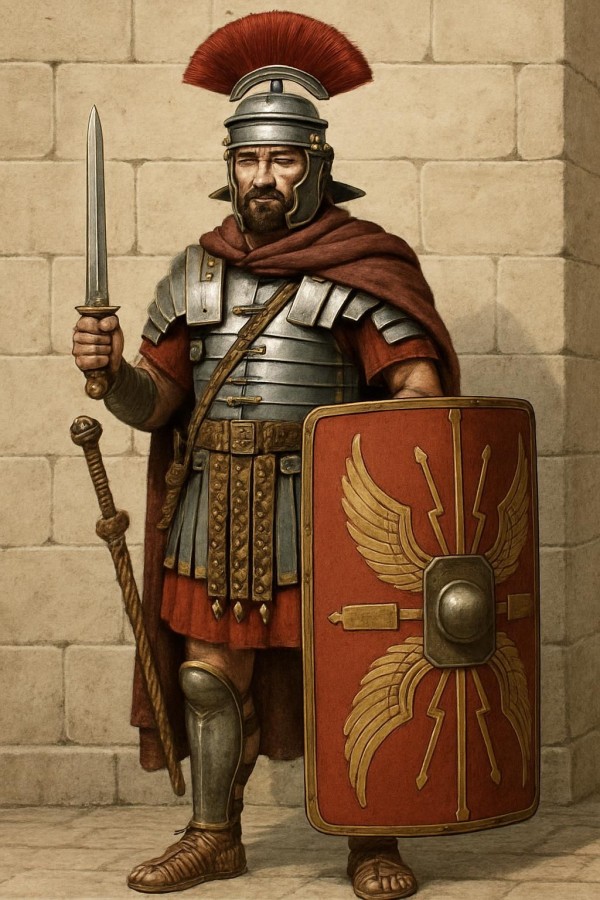
What the Title Meant: Duties and Day-to-Day
The Tesserarius served within a centuria as a senior non-commissioned officer whose practical responsibilities were simple to state yet complex to execute. Chief among these: overseeing sentries, issuing the watchword that distinguished friend from foe during the night, and ensuring men remembered orders passed down from centurions. He maintained a register or memory of assignments, arranged guards, and acted as a conduit of information between command and rank-and-file.
Unlike the decorated tribunes or centurions whose exploits attract historians’ attention, the Tesserarius operated in the granular domain of military routine. That routine, however, underpinned Rome’s ability to sustain long campaigns, hold fortified positions, and move with predictable cohesion.
Status and Social Weight
Socially, the Tesserarius could be promoted from within the ranks, often selected for reliability and sobriety. They were not insulated from the army’s patronage networks but were recognizable for their trustworthiness. In a military culture obsessed with unit cohesion and reputation, the Tesserarius embodied a quiet form of prestige: status conferred through competence rather than ceremony.
"A watchword is more than a password; it is a piece of confidence, a tiny contract of recognition between soldier and state." — attributed reflection on the Tesserarius' charge.
Operational Importance: Why One Rank Mattered
Consider a night march across hostile territory, or an ambush in broken ground: the ability to identify friend from foe, to mobilize guards, and to preserve the chain of command is the difference between orderly withdrawal and rout. The tesserarius’ watchword — the tesseram — could prevent catastrophic friendly fire and preserve strategic surprise. Their role extended to administration of rotations, ensuring sentries were alert, and even executing basic disciplinary measures.
Interactions with Other Ranks
- Worked directly under centurions and interacted with optiones and decurions.
- Coordinated with scouts and cavalry detachments when posts required rapid communication.
- Served as a disciplinary intermediary: enforcing routine punishments or escalating matters when necessary.
Training and Selection
Selection for the Tesserarius post involved a pragmatic test of temperament. Prowess in combat mattered less than reliability, literacy for reading and recording watchwords mattered modestly more, and a proven track record of vigilance and administrative steadiness sealed the choice. The post was often an apprenticeship in leadership: many optiones and centurions had previously performed Tesserarius duties early in their careers.
The Tesserarius and the Camp's Night Life
When the camp settled after sunset, the Tesserarius' influence quietly expanded. He organized the nodal points where sentries were posted, rehearsed evasive signals, and kept a roster of those allowed to cross sentry lines. The ritual of changing watches — the tessera exchange — was both symbolic and functional, binding men to a practice that reduced error and increased trust.
Military Role of the Tesserarius in Rome — 로마 공화정의 탄생과 설계
Tesserarius — the watchword keeper — sits conceptually at the confluence of Rome's military efficiency and its civic imagination. In the city’s transition from monarchy to the republican experiment, systems of delegated trust became central. The republic's architects fashioned institutions in which shared responsibilities, distributed vigilance, and accountability structured public life. The Tesserarius, humble in rank yet crucial in function, exemplified the republic's ethos: a state powered by men entrusted with small duties that collectively guaranteed security.
In campaigns of expansion and in the quotidian discipline of camps, the Tesserarius enacted a kind of civic technology — an administrative competence that turned soldiers into a community capable of sustaining complex operations. Seen in this light, his watchword was not merely a mnemonic device but a microcosm of republican governance: defined roles, mutual recognition, and structured accountability.
A Note on Variations and Evolution
Across the vast sweep of Roman history, titles and duties transformed. The Tesserarius’ functions shifted as formations evolved, new weaponry altered tactics, and auxiliary arrangements diversified the army. Yet the essential logic remained: someone had to preserve the thread of order while commanders managed strategy.
Practical Illustrations
Imagine a legion shifting camp near a hostile province. The Tesserarius organizes the night patrols, ensures the watchword is changed and communicated to allied detachments, and logs which sentry posts require reinforcement after intelligence reports. When a skirmish erupts, his prior arrangements may be the factor that prevents disarray.
Legacy and Interpretation
Modern historians read the Tesserarius as a window into everyday military practice: a reminder that the success of empires turns on countless acts of competence at low levels of command. The rank also highlights Roman reliance on disciplined administration as much as on battlefield audacity.
Further Reading
For those who wish to dig deeper into the apparatus of the Roman military and the social meaning of its ranks, works on legionary administration and Roman military law provide context. When citing modern sources, the linked titles open in new windows for quick reference.
The Tesserarius remains a modest but telling figure: a sentinel of words and order whose presence quietly ensured that Rome’s armies were not merely instruments of force but organizations of memory and trust.
Summary (Korean): 마지막 단락은 한국어로 요약되어 있습니다.
로마 공화정에서 테세라리우스(Tesserarius)는 겉으로 드러나는 영광은 적었지만 군대의 일상과 야간 안전을 책임지는 핵심적 역할을 맡았습니다. 감시의 조직, 교대 근무의 관리, 암호화된 감시암호(tessera)의 전달과 보관은 전술적 성공과 병력의 생존을 좌우했습니다. 그의 업무는 단순한 관리가 아니라 신뢰를 축적하고 규율을 실행하는 공화국적 행정의 축약이었으며, 작은 권한들이 모여 제국적 군사력의 안정성을 보장한 사례입니다.
댓글목록1
홍민우님의 댓글