Notable Figures: Camillus in Ancient Roman Republic

 운영자
운영자
본문
When we think about the Ancient Roman Republic, certain names instantly catch our attention. Some are infamous, others legendary. Among them, Camillus stands out as a figure who shaped Roman history in ways that echo beyond dusty tomes and old statues. But who exactly was Camillus, and why does his story still matter today? Let’s take a stroll through time and explore his remarkable legacy.
Marcus Furius Camillus was often hailed as the "Second Founder of Rome," an impressive title considering Rome was already ancient by his day. He lived during the 4th century BCE, a turbulent era when the Republic was fighting for survival against neighboring tribes and internal political strife. Camillus wasn’t just any military leader; he was a statesman, a hero, and in some ways, a symbol of Roman resilience.
To begin with, let’s talk about why Camillus earned such renown. One of his most famous exploits was his leadership during the Gallic sack of Rome in 390 BCE. When the Gauls invaded and overwhelmed the city—an event that shocked all of Italy—Camillus’ role was critical. According to legend, after Rome suffered this devastating blow, he rallied the surviving citizens, organized the defense, and ultimately expelled the Gauls. It’s a story of comeback that many Romans later clung to as a source of pride.
That doesn’t mean his path was easy or straightforward. Camillus faced political opposition, exile, and even defeat. Yet, time and again, he proved his worth not just on the battlefield but in Rome’s political arena. He was twice appointed dictator, a Roman office granting extraordinary authority in emergencies. He used this power wisely to stabilize the Republic and push forward reforms that strengthened Rome’s institutions.
What fascinates me is how Camillus is portrayed almost like a legendary figure, straddling the line between history and myth. Ancient writers like Livy and Plutarch painted him as a paragon of Roman virtues: courage, duty, and patriotism. Even some modern historians debate how much of Camillus’ story is fact versus embellishment. Does it remind you of other historical heroes whose tales were polished by time? Probably.
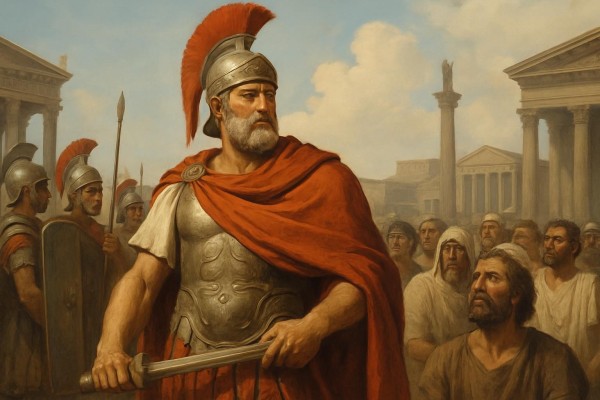
Camillus’ military campaigns were more than just fights over territory. They helped shape Rome’s expansionist policies and its relationship with other Italian peoples. His victories over the Etruscans and other enemies increased Rome’s influence in central Italy, laying groundwork for the Republic’s eventual dominance across the Mediterranean. Without him, the Republic might have taken a very different course.
You might wonder, how did Camillus manage to juggle the demands of war and politics? It boils down to his character and leadership style. He wasn’t simply a warrior charging into battle; he was a strategic thinker and a bridge-builder in Rome's fractious political landscape. This made him a natural choice when the city faced crises. His ability to unite a divided society says a lot about what leaders needed back then — and what we might still value today.
Another interesting tidbit is how Camillus has been remembered over the centuries. His image as a savior of Rome helped inspire later generations, especially during times when Rome itself was under threat. He became part of Rome’s cultural identity, embodying the spirit of endurance and renewal. Have you noticed how some historical figures become symbols not just of their time but of ideas and ideals that last much longer?
From another angle, Camillus’ story also reflects the complexity of Roman republican values — balancing individual heroism with the collective good. His life challenges a simplistic view of history as a series of wars and politics, opening a window into the struggles and hopes of the people who built what many consider the foundation of Western civilization.
So, why does it matter now? In a way, Camillus teaches us about resilience and leadership in uncertain times. Even when the situation looks bleak and the stakes are high, a committed and visionary leader can make a huge difference. Not just by winning battles, but by inspiring a community to stand firm and move forward together. That's a timeless lesson.
To wrap up, Camillus is more than just a name from antiquity. He symbolizes Rome’s grit, its ability to bounce back, and the complex dance between power and responsibility. His legacy is a reminder that history isn’t just about the powerful few, but about how those individuals connect with the societies around them.
간단히 말해, 카밀루스는 고대 로마 공화국의 위기 속에서 중요한 역할을 한 지도자입니다. 그는 전쟁과 정치 양면에서 뛰어난 능력을 보이며 로마를 재건하고 확장하는 데 공헌했습니다. 그의 이야기는 역사와 신화가 뒤섞인 면이 있지만, 리더십과 공동체 정신의 상징으로 오늘날까지 큰 의미를 지니고 있습니다.
댓글목록0