Quintus Tullius Cicero

 운영자
운영자
본문
Quintus Tullius Cicero
A reflective, stylish exploration of a Roman life beside a famous brother
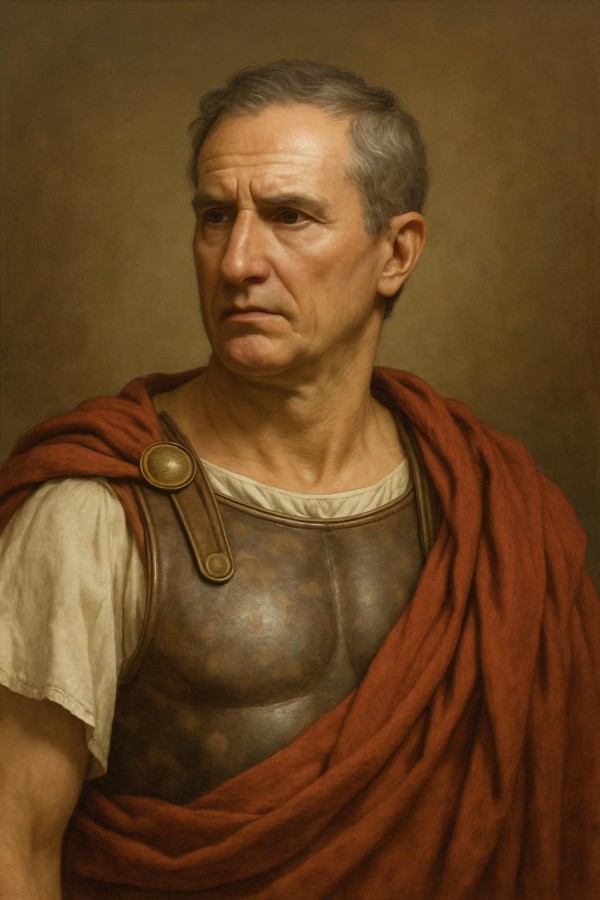
In the broad, turbulent tapestry of the late Roman Republic, Quintus Tullius Cicero stands as a figure often seen through the reflective surface of another life: that of his elder brother, the orator and statesman Marcus Tullius Cicero. Yet when we pause to unpeel layers of correspondence, administrative notes, and the occasional passing reference in the works of contemporaries, a portrait emerges — not just of a supporting actor, but of a man whose temperament, ambitions, and missteps illuminate the texture of Roman provincial rule, military command, and private loyalty. This essay is a deliberate, embellished reading of that portrait: attentive to nuances, enriched with rhetorical ornaments, and intent on drawing out a coherent narrative from fragmentary evidence.
Let us begin with family and formative influences. Quintus and Marcus were born into the Roman equestrian class, a milieu that prized rhetorical skill, civic service, and social visibility. The household they shared — not merely an architectural space, but a culture of education and patronage — chiseled habits of diligence, letter-writing, and public ambition into both brothers. For Quintus, the shadow of a brilliant sibling did not stifle his pursuit; instead, it became a framework within which his own virtues and vulnerabilities could be observed.
"To know Quintus," a modern reader might say, "is to read the brother's letters as both mirror and map: reflecting familial affection while mapping the contours of Roman provincial administration."
Much of how we imagine Quintus comes through epistolary windows. Marcus's letters to Quintus are intimate dispatches that combine counsel with sarcasm, instruction with consolation. They reveal political anxieties, tactical calculations, and domestic arrangements. Through these documents, we glimpse Quintus as a practical man: manager of estates, commander of men, and — on occasion — a figure who misjudged the temper of troops or the subtleties of Roman law.
Military command and the human dimension
Quintus's military experiences — whether commanding troops in transient campaigns or supervising garrisons — place him in the demanding role that turned Roman citizens into soldiers and administrators into governors. Those who study military command often emphasize strategy, logistics, and decisive action. Yet Quintus's letters show the everyday reality: the discipline of legionaries, the friction of supply lines, the need to maintain morale and the delicate diplomacy required when handling Greek-speaking provincials or Italian allies. He appears as a hands-on commander, attentive to the human worries of his men and acutely aware of the political consequences of each misstep.
"A commander must be both stern and solicitous, or he is neither,"
Consider also the economic and administrative duties: collecting taxes, organizing grain shipments, adjudicating disputes among local elites. These were not glamorous tasks, but they were the indispensable scaffolding of Roman power. Quintus's correspondence suggests a man who valued order and was, at times, frustrated by the messy realities of provincial management. His writings — practical, often concerned with immediate matters — are a reminder that the Republic's stability depended as much on meticulous ledger-keeping and prompt dispatches as it did on oratory in the Forum.
Anecdote
Once, when a logistical delay threatened winter provisions, Quintus's quick measures — negotiating with local granaries, rearranging convoy priorities, and a frank address to his troops — averted mutiny. It is the sort of episode recorded in administrative notes rather than epic poems, but it tests character all the same.
That combination of pragmatism and occasional impatience surfaces repeatedly. In private letters Marcus teases Quintus for his brusqueness; yet those same letters also show gratitude for concrete actions taken in turbulent moments. Such dualities — affectionate sarcasm from one brother, dutiful action from the other — capture a common Roman dynamic: public reputation and private loyalty braided together.
Beyond action, Quintus's place in the historical imagination invites a reflection on voice. Marcus is remembered for speeches and treatises; Quintus is remembered largely through the responses he provoked. That indirectness can be aesthetically satisfying. Imagine reading a palindrome in which each sentence echoes back the social habits of a time: the epistolary style, the administrative jargon, the impatient command, the sarcastic rebuke. Each echo helps reconstruct the texture of Roman political life.
Rhetoric, reputation, and the politics of familiy
From a rhetorical standpoint, Quintus provides a foil for Marcus's grandeur. Where Marcus cultivated a public persona, Quintus often inhabited the more prosaic roles: the executor of policy, the negotiator in the field, the executor of logistical plans that made oratory meaningful. Yet rhetoric need not be confined to the Forum. In his own way, Quintus practiced a form of administrative rhetoric: letters that persuade through clarity, commands that command respect through efficiency. The study of Latin letters teaches us that influence is never produced only by eloquence; it also requires reliability.
If we set aside biography for a moment and attempt a portrait in adjectives, we might call Quintus — tentatively and provisionally — prudent, competent, occasionally irascible, and consistently loyal. These are small virtues compared to the grand virtues lauded in epic histories, but they are the ones that hold institutions together.
Let us now dwell on specific scenes that illuminate the man: an arrival at a provincial town, a tribunal in which an Italian colonist complains about tax irregularities, a clearing of grain stores ahead of winter. These are small narratives, but they reveal Quintus's temperament. He is methodical, impatient with sophistry, yet capable of humor. In correspondence he jokes, he instructs, and he sometimes laments the difficulty of managing men hardened by campaigns.
For historians, one valuable byproduct of such letters is the texture they bring to legal and social practices. Quintus's notes about contracts, leases, and municipal disputes reveal the interactions between Roman law and local customs. Through his voice we catch a glimpse of how Roman administrators negotiated with Greek city-states, adapted to local tax systems, and mediated between veterans and provincial elites.
"Administrative detail," one might say, "is the secret backbone of empire." Quintus's surviving traces corroborate that aphorism with lived examples.
We must also consider the limits of knowledge. Few comprehensive biographies exist; much is conjecture, and caution is necessary. Still, the available fragments let us compose a plausible narrative arc: a man trained in Roman letters, active in military and civic roles, and forever in correspondence with a brother whose public persona sometimes overwhelmed private ties. Yet that relationship is exactly what grants Quintus an enduring interest. He allows us to understand the social ecosystem that produced Rome's famous voices.
Legacy and modern appreciation
In modern scholarship, Quintus's significance is both derivative and original. Derivative, because his name is often attached to his brother's enduring writings; original, because his actions and the tone of Marcus's letters supply critical context for understanding Roman governance. Students of the Roman Republic can learn from Quintus about the mundane mechanisms that supported grand speeches and dramatic senatorial debates. If Marcus gave voice to the Republic's ideas, Quintus helped make those ideas operational.
To take a more imaginative approach: picture Quintus sitting at a small wooden table beneath a shuttered window, scratching a reply to his brother. The ink blots, a hasty correction. He writes of grain arrivals and levy disputes; Marcus replies with counsel on rhetoric and law. These exchanges are domestic yet consequential, mundane yet formative. Their interplay underscores how personal correspondence functioned as a channel of governance and social control.
Finally, let us sketch a set of interpretive takeaways: first, that minor figures matter because they connect the famous to the ordinary; second, that administrative letters are a vital source for social history; and third, that loyalty and competence, though less glamorous than oratory, are essential qualities in times of political fracture.
Stylistic notes and an invitation
This piece has been written to combine historical sensitivity with a touch of aesthetic flourish. Inline ornaments — italics, bold appeals, underlined emphasis, highlighted phrases, and small asides — have been used to mimic the rhetorical variety that characterized Roman epistolary discourse. The hope is that readers will be invited to imagine the tactile reality of letters: the weight of the papyrus, the flow of ink, and the human voice pressed into formal script.
- Administrative competence as a form of civic virtue
- Letters as instruments of policy and affection
- Caveat lector: interpret with measured skepticism
If you take away one thought, let it be this: history is often narrated through the loudest voices, but the quiet hands that turn the wheels deserve attentive study. Quintus Tullius Cicero exemplifies those hands — pragmatic, sometimes exasperated, often faithful — and through him we better understand how the Republic functioned at ground level.
Further reading & reflection
For the curious reader: consult translations of the Cicero letters for the immediate voice of the period. Explore modern commentaries that treat the social history of Rome and studies that focus on provincial administration. Above all, read slowly — the Roman past rewards patience.
Thank you for following this stylistic and historical tour. Whether you are drawn to rhetorical splendor or the sober mechanics of administration, Quintus's life proves a useful case study. He stands as a reminder that the apparatus of empire depends as much on dependable functionaries as it does on sweeping oratory.
마지막으로, 이 글의 요지는 간단합니다. 퀸투스 툴리우스 치케로는 유명한 형제의 그림자 속에서 살아간 인물이지만, 그가 남긴 행정적·군사적 흔적과 형제 간의 편지는 로마 공화국의 일상 운영을 이해하는 데 귀중한 자료입니다. 그의 삶은 웅변보다 신뢰성과 책임감이 얼마나 중요한지를 상기시켜 줍니다.
댓글목록0