Gaius Julius Caesar: A Key Figure of the Roman Republic

 운영자
운영자
본문
Gaius Julius Caesar: A Key Figure of the Roman Republic
Dive into the legacy of one of the most influential figures of ancient Rome.
Discover how Caesar transformed the political and cultural landscape of his era.
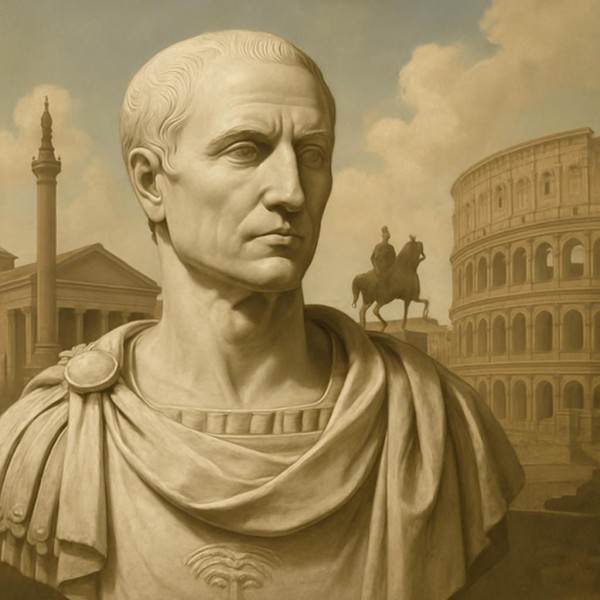
Introduction to Gaius Julius Caesar
Gaius Julius Caesar stands as a monumental figure in the story of Rome, a statesman, military general, and writer whose ambition and vision forever altered the fate of his homeland. Emerging during a time of great turmoil within the Roman Republic, Caesar's actions and decisions propelled him onto the world stage and set the foundation for the transition from the Republic to the powerful Empire that would inherit its legacy. His life unfolded as a blend of extraordinary leadership, bold reforms, political intrigue, and relentless pursuit of greatness.
Caesar’s rise – shaped by family, ambition, and opportunity – marks a defining chapter in world history.
The Setting: Politics and Society
The ancient Roman political landscape during Caesar’s lifetime was fraught with competition, inequality, and institutional inertia. The traditional authority of the Senate and ruling oligarchs was increasingly challenged by social unrest and the demands of the Plebeians. The balance between patrician elites and the rest of society was fragile, fostering internal divisions ripe for dramatic change.
The Roman political machine was governed by complex institutions: Consuls, Praetors, Senators, Tribunes of the Plebs, Censors—all woven into a tapestry of traditions, laws, and honor. Power was jealously guarded; progress often met with fierce resistance. Within this context, wealth and birth remained crucial, but oratory, military prowess, and ambition emerged as vital drivers for anyone seeking prominence.
It was into this turbulent society—an arena of both opportunity and peril—that Gaius Julius Caesar was born, soon to stand at its center.
Birth, Family, and Early Life
Caesar was born in July 100 BCE to the Julii family, long regarded as one of Rome’s most venerable lineages. The Julii claimed ancestral descent from Venus herself, lending Caesar a status at once mortal and divine in the hearts of many Romans.
- Father: Gaius Julius Caesar (the Elder), a praetor and governor
- Mother: Aurelia Cotta, known for intelligence and dignity
- His paternal aunt married Gaius Marius, a famous general
Caesar’s upbringing was steeped in tradition yet colored by personal adversity. He lost his father at a young age, an event that would sharpen his resolve to forge his own path and exceed the expectations set by his lineage.
Military Beginnings
Caesar entered the military at an early age, a traditional stepping stone for aspiring Roman statesmen. His first campaigns took him to Asia and Cilicia, where he displayed bravery in combat and burgeoning talent for leadership. He famously won the prestigious Civic Crown (corona civica), awarded for saving the life of a fellow citizen in battle—an early sign of both valor and popularity.
- Developed military strategy skills alongside command abilities
- Established a reputation for courage and magnanimity
- Built valuable networks with soldiers and local leaders
These formative experiences not only added to Caesar’s credentials but reinforced his drive for further achievement in politics and beyond.
Climbing the Political Ladder
Returning to Rome, Caesar adeptly navigated the early phases of the Cursus Honorum, the sequence of offices that defined elite political careers. By leveraging alliances, public displays of generosity, and oratory skill, he was elected to a series of public offices:
- Quaestor: Managed finances, marked his official entry into high politics.
- Aedile: Organized public games, enhanced his popularity among citizens.
- Pontifex Maximus: Head of Roman religion, a prestigious role impacts power and legitimacy.
- Praetor: Judicial responsibilities and furtherance of his political network.
Each step was marked by both calculated generosity and heavy debts. Yet, with each move, Caesar’s reputation grew and so did his circle of influence. His shrewd manipulation of tradition, public opinion, and political rivalries placed him at the heart of Roman power and intrigue.
The Formation of the First Triumvirate
Recognizing the limitations of solitary ambition, Caesar orchestrated one of the most notable political pacts in Roman history—the First Triumvirate. This private alliance, forged in 60 BCE, bound together Caesar, Pompey the Great, and Crassus. Each man brought unique assets to the arrangement:
- Caesar: Political maneuvering, popularity, and innovative thinking
- Pompey: Military prestige and eastern conquests
- Crassus: Immense personal wealth and connections
The Triumvirate functioned as an informal ruling committee—circumventing the Senate and dominating Roman politics for several years. Such alliances were both cause and consequence of the weakening Republican order.
Conquests and Campaigns: The Gallic Wars
Caesar’s true military prowess became legendary during the Gallic Wars (58–50 BCE). With a combination of strategic brilliance, relentless energy, and rhetorical skill, he led Roman legions in an ambitious campaign that would bring the vast and diverse regions of Gaul under Roman dominion.
Highlights of the Gallic Wars:
- Defeated warrior tribes like the Helvetii, Belgae, and Arverni
- Created alliances and exploited local rivalries
- Stunned the Republic by bridging the Rhine and crossing into Britain
Not only did this campaign furnish Caesar with enormous spoils and loyal battle-hardened troops, but it also turned him into a figure both admired and feared throughout Rome. His Commentarii de Bello Gallico, written in elegant Latin, chronicled the campaigns and cemented his fame as both general and author.
Civil War: "The Die is Cast"
The power struggle between Caesar and the Senate—backed by Pompey—eventually erupted into full-scale civil war. When ordered to relinquish his command and return to Rome as a private citizen, Caesar instead famously crossed the Rubicon River in 49 BCE, declaring "Alea iacta est" (the die is cast). This irreversible step set Rome onto the path of violent conflict.
- Pompey controlled the Senate and the Eastern Legions
- Caesar’s swift march forced many to flee Rome
- Key battles: Pharsalus, Thapsus, and Munda
Triumphing in the decisive Battle of Pharsalus, Caesar emerged as the uncontested master of Rome. The civil war’s aftermath witnessed the death or exile of rivals and the reopening of old wounds within Roman society.
Reforms and Dictatorship
Having seized power, Caesar moved swiftly to enact a comprehensive program of reforms—both to stabilize Rome and to strengthen his own control. His policies targeted nearly every aspect of Roman life, from Senate expansion to urban renewal.
Major reforms included:
- Increased the Senate from 600 to 900 members
- Distributed land to veterans and the urban poor
- Reorganized grain doles and reduced corruption
- Implemented calendar reform (Julian calendar)
- Extended Roman citizenship to provinces
These sweeping changes upset many aristocrats and conservatives, who saw in Caesar’s rule the ghost of monarchy. Despite the toxicity of his centralization of power, he maintained significant support among the lower classes and the army.
Personal Life & Public Image
Caesar’s personal life was as complex as his political career. Renowned for his wit, charisma, and literary taste, he moved skillfully through Rome’s elite circles. He married three times—Cornelia, Pompeia, and Calpurnia—and maintained several high-profile liaisons, including his romance with Cleopatra VII of Egypt. This union blended personal passion with political calculation, further amplifying his legend.
Despite (or perhaps because of) his ambition, Caesar cultivated a public persona blending humility, generosity, and irresistible self-confidence. His ability to sway crowds and command loyalty proved crucial, even as envy and conspiracy brewed under the surface.
Assassination and Aftermath
On the Ides of March (March 15), 44 BCE, Caesar was assassinated by a group of senators—among them Brutus and Cassius—who feared his growing power threatened Rome’s cherished traditions of liberty and collective governance. The conspirators stabbed him a reported 23 times in the Senate chamber, ending his life but not his story.
The immediate result was chaos. Rather than restoring the Republic, the assassination plunged Rome into a new cycle of civil wars, eventually leading to the rise of Caesar’s adopted heir, Octavian (Augustus), and the dawn of the Roman Empire.
Caesar’s Legacy: Between Republic and Empire
Historians continue to debate the meaning of Caesar’s life and death. Was he a tyrant or a visionary reformer? Did he save Rome from dissolution or destroy its foundational liberties? What is clear is that his actions marked the end of one era and the beginning of another.
- Caesar’s reforms lay the institutional groundwork for the Empire.
- His writing elevated Latin prose and preserved insights into the late Republic.
- The drama of his life inspired artists, thinkers, and politicians through millennia.
Above all, Caesar’s legacy remains alive in discussions of leadership, ambition, and the delicate balance of liberty and order in any society.
Conclusion
The story of Gaius Julius Caesar is not simply one of conquest and ambition. It embodies the creative energies, political battles, and shifting ideals of his time. As a general, lawmaker, orator, and writer, Caesar remains a mirror for contemporary readers to reflect upon the promises and perils of change in times of crisis. His life underscores the enduring question at the heart of every republic: how best to marry order and freedom?
댓글목록0