Lemonum: A Key Province in Roman Republic Expansion

 운영자
운영자
본문
Lemonum: A Key Province in Roman Republic Expansion
Unveiling the Strategic Importance and Lively History of Roman Lemonum
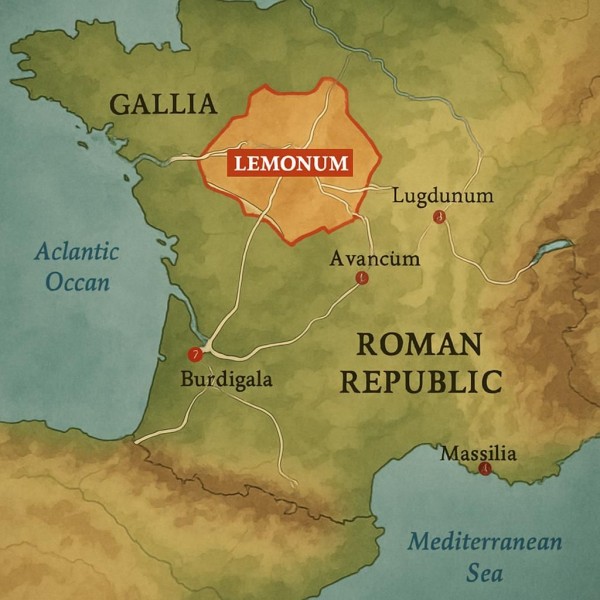
In the annals of antiquity, Lemonum, modern-day Poitiers in France, played a pivotal role in shaping the course of the Roman world. Its journey from a Gallic oppidum to one of the westernmost outposts of a rising power encapsulates the intricate dance between culture, military ambition, and urban evolution.
Geopolitical Landscape: How Lemonum Rose to Prominence
Perched atop a hill between the Clain and Boivre rivers, Lemonum was a settlement of the Pictones tribe long before Roman conquest. Its strategic elevation provided a commanding view, controlling key land and river routes across western Gaul. This geography guaranteed Lemonum's attractiveness to ancient power brokers.
By the late 2nd century BCE, Roman generals recognized the settlement’s value as a staging ground for northern expeditions, fostering a gradual cultural integration and infrastructural development that would persistently bind the Gallic community to Roman interests.
The Roman Republic’s Arrival — Subduing and Transforming Lemonum
The expansion of Roman influence in Gaul was not a process of simple subjugation. It was a tapestry of alliances, betrayals, and innovation—often embodied in towns like Lemonum. In 56 BCE, Julius Caesar’s campaigns officially brought the region under Roman control, integrating it into the fabric of a dynamic and ever-evolving provincial landscape.
Under Roman stewardship, Lemonum began a transformation. Political loyalty was gradually assured with infrastructure projects and the introduction of the civitas system, marking Lemonum as a key administrative node in the Roman west.
Urban Growth, Architecture, and Daily Life
Roman influence ushered in a period of vigorous urbanization. Lemonum was adorned with the trappings of classical civilization—august temples, a forum bustling with civil discourse, public baths brimming with daily activity, and an amphitheater that echoed with cheers. The ancient bridge over the Clain River, a marvel of engineering, stitched the city’s neighborhoods into a coherent whole.
The population became a melting pot: Roman settlers, indigenous Pictones, merchants, and migratory craftsmen. Latin became predominant, yet Gallic religious and social customs persisted, attesting to cultural resilience and gradual synthesis rather than simple dominance. The vibrancy of daily life was reflected in the mosaic of household objects, inscriptions, and the inviting warmth of Lemonum’s city streets.
Key Military and Economic Functions
Lemonum’s central location made it indispensable for the republic’s military logistics. Its roads radiated into the depths of Gaul, and the settlement often served as a mustering point for Roman legions or as a rest-and-refit depot for campaigns beyond the Loire.
The city’s economic vigor was fueled by agriculture and trade. From here, salt, wine, pottery, and crafts circled the Roman trade network. Workshops, market halls, and roadside inns sprouted in rhythm with expanding provincial stability, feeding the city’s prosperity.
Taxation and the grain supply system in Lemonum illustrate the efficiency of Roman administration—public granaries, local markets, and tax-gatherers becoming the pulse of provincial economic order.
Lemonum in the Wider Roman Province
Incorporated into the vast province of Gallia Aquitania, Lemonum served as its administrative capital. As the seat of the provincial governor and the nexus for tribunals and public festivals, it radiated both political and cultural energy.
The city became a focal point for diplomatic engagements with neighboring Gallic tribes and other urban centers. Over time, this administrative legacy would define Lemonum as a key agent in projecting Roman authority across the far reaches of Gaul—even as the shadow of the later Empire approached.
Social Change and Cultural Synthesis
The integration of Lemonum into the Roman system spurred social mobility. Gallic elites who pledged loyalty to Rome were granted legal privileges. Intermarriage and economic partnership fostered cultural synthesis—local folklore began to incorporate Roman myths and Latinized deities.
Education flourished; young elites learned rhetoric, philosophy, and commerce in Latin. New forms of art, entertainment, and religious ritual emerged as Lemonum’s architects, priests, and artists looked to both native and foreign traditions for inspiration.
Enduring Legacy
Even after the republican period yielded to the imperial order, Lemonum continued to prosper as an innovative center. Its legacy can be seen in the surviving stonework on Poitiers’ streets and the resilience of urban patterns shaped in those distant days. The city’s layered history today invites scholars and travelers alike to pause and ponder the sweep of conquest and cooperation that defined a transformative era.
Archaeology continues to uncover vestiges of its markets, villas, and public works, each artifact hinting at the enduring dialogue between invaders and natives—a story that continues to shape European civilization.
Conclusion: Why Lemonum Matters Today
Beyond its ruins, Lemonum’s story showcases the complexity and adaptability of provincial life on the Roman frontier. It was a site where cultures merged, administration advanced, and the destinies of empires were negotiated on the streets and in the homes of everyday people. As we look back, Lemonum stands as an enduring case study for the fluidity of identity and the lasting impact of Rome’s westernmost expansions.
요약 (Summary - in Korean)
레모눔(현대의 포아티에)은 고대 로마의 서방 팽창에서 핵심적인 행정 및 문화적 역할을 수행한 도시입니다. 전략적 지리와 로마의 강력한 인프라 덕분에 군사적·경제적 거점이 되었고, 갈리아와 로마 문화가 융합되는 지점이기도 했습니다. 오늘날까지도 도시는 로마의 정책, 건축, 사회 변혁의 흔적을 간직하고 있어 로마 시대의 변화와 융합을 생생하게 보여줍니다.
- Lemonum
- Roman Republic
- Gallia Aquitania
- Infrastructure
- Military
- Trade
- Culture
- Urbanization
- Pictones
- Archaeology
댓글목록0