Gergovia and Roman Expansion

 운영자
운영자
본문
Gergovia and Roman Expansion
An exploration of a pivotal encounter between Rome and the Gallic world — its causes, course, and consequences.
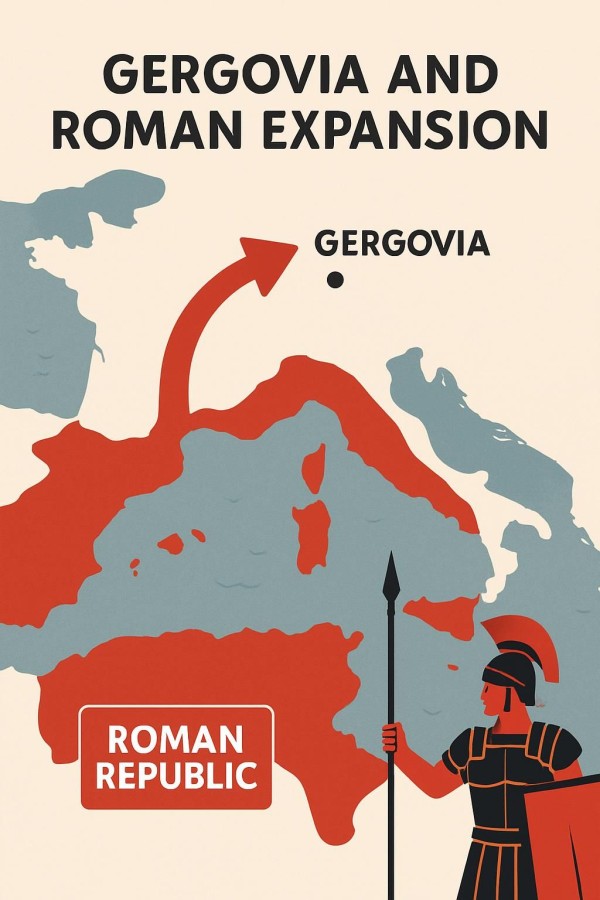
Introduction: The Stage of Conflict
In the late Republican era of Rome, ambition and expansionist policy propelled legions far beyond the Italian peninsula. The campaign that brought Rome to the slopes of Gergovia is emblematic of the clash between a rising Mediterranean power and resilient Celtic polities. This article surveys the background of the campaign, the clash itself, and how Gergovia influenced the trajectory of Roman expansion into Gaul.
Background: Political and Military Context
The Roman Republic in the first century BCE was not a static polity; it was a dynamic, often turbulent system in which political figures sought military glory to secure influence at home. Among them, Gaius Julius Caesar saw Gaul as both a field of military opportunity and a theater for personal aggrandizement. The Gallic Wars (58–50 BCE) read in contemporary Roman sources as a campaign of subjugation, but from the Gallic perspective it was a desperate defense of autonomy against an expanding power.
The Gallic world was not a monolith. Arverni, Aedui, Sequani, and many other tribes maintained shifting alliances. Gergovia lay in the territory of the Arverni, a powerful confederation whose leaders had reasons both to resist and to make tactical decisions against Roman advances.
Who Was Vercingetorix?
The figure most closely associated with the resistance at Gergovia is Vercingetorix, a young Arvernian noble who emerged as a unifying leader among several Gallic tribes. His name — often translated as "great king of warriors" — became a symbol of organized Gallic resistance. Vercingetorix's strategies evolved from conventional open-field tactics to the judicious employment of scorched-earth measures and fortified hilltop defenses that exploited local terrain.
Caesar later wrote that Vercingetorix’s rising threatened to "shake the very foundations" of Roman ambitions in Gaul — a striking admission given Caesar’s typically rhetorical confidence.
Gergovia: Geography and Defensive Advantage
Gergovia was not merely a name on a map. Its topography — a plateau and steep approaches — provided a natural fortress. From elevated positions the defenders could observe troop movements, control vital supply lines, and funnel attackers into disadvantageous ground. Rome’s disciplined maniples and legions, formidable on open plains, found the slopes and chokepoints around Gergovia to be an unforgiving theater.
Tactical ingenuity by the defenders turned the landscape into a force multiplier. Entrenched positions, hastily constructed ramparts, and the ability to sally forth from secure perches allowed relatively smaller forces to achieve significant results against large invading armies.
Caesar's Approach and the Decision to Assault
Caesar’s campaign toward Gergovia combined careful supply planning with aggressive maneuvering. However, on the ground his forces encountered limits: local intelligence was imperfect, Gallic morale was high, and the defenders used every advantage. The decision to assault Gergovia demonstrated the tension between political imperatives back in Rome and the hard realities of campaigning in foreign, constricted terrain.
Contemporary sources suggest Caesar underestimated the cohesion of the Gallic defense. Whether through overconfidence, the pressure to secure a rapid and spectacular victory, or misreading the enemy’s resolve, Roman forces pressed attacks that would ultimately be repelled with considerable cost.
The Battle Unfolds
Descriptions of the battle vary, but the broad outline is consistent: Roman units attempted to scale fortified positions under hostile fire, suffered from broken formations, and were vulnerable to counterattacks. Gallic warriors exploited sudden sallies and the precariousness of Roman supply lines to press their advantage. It was, for Rome, a bruising affair — significant not only for the immediate casualties but for the blow to the image of Roman invincibility.
- Assault on Heights: Roman troops faced uphill combats that dissipated their cohesion.
- Local Resistance: Gallic defenders used intimate knowledge of approaches to create ambushes and barriers.
- Logistical Strain: Roman supply movements were harassed, reducing stamina and the ability to sustain the attack.
Why Gergovia Matters for Roman Expansion
On the surface, a single defeat might seem to be a mere tactical setback. Yet Gergovia had strategic resonance. It revealed vulnerabilities in Roman campaigning methods and underscored how terrain, local knowledge, and unity of purpose among disparate tribes could stall Rome's march. For Rome’s leaders and public, the episode raised awkward questions about the limits of conquest and the costs of subduing regions that did not acquiesce readily.
Importantly, Gergovia did not end Rome’s expansionist momentum. It did, however, force Roman commanders to recalibrate tactics, invest in intelligence, and sometimes forge diplomatic ties with certain tribes to isolate others. In other words, the Roman approach became more multifaceted: conquest by force blended with coalition-building and political manipulation.
Aftermath: Repercussions and Shifts
After the clash at Gergovia, both sides reassessed. Rome regrouped and later achieved a decisive victory at Alesia. For the Gauls, the battle at Gergovia remained a powerful symbol of resistance and a moment of unity that, for a time, changed the dynamics of the campaign. Politically, the defeat complicated Caesar’s narrative back in Rome; militarily, it taught lessons about siegecraft and maneuver in confined landscapes.
The longer-term consequences are mixed. Rome ultimately annexed Gaul and incorporated many of its peoples and elites into imperial frameworks. But the memory of Gergovia — and other such engagements — lingered, influencing later historiography, nationalist myth-making, and modern archaeological interest.
Historiography and Sources
Our knowledge of Gergovia is filtered mainly through Roman accounts, archaeological survey, and later reinterpretations. Caesar’s own commentaries provide a narrative shaped by his political purposes. Modern historians strive to balance these accounts with material evidence and caution about bias. Critical reading of sources, combined with systematic excavation and landscape analysis, yields a richer, though still incomplete, picture of the events.
Archaeologists have searched for fortifications, artifact scatters, and the traces of temporary camps. While debates persist about the precise locations of certain maneuvers, the overall consensus underscores that Gergovia's terrain and the organizational energy of its defenders were decisive.
Cultural Memory and Legacy
Beyond immediate military outcomes, battles like Gergovia enter cultural memory. In later centuries, the narrative of Gallic resistance acquired new layers of meaning: heroes were recast, landscapes sanctified, and the story used for various political ends. For modern audiences, the battle provides a lens through which to explore identity, resistance, and the complexities of imperial encounters.
Museums, commemorative plaques, and scholarly works continue to keep the memory of Gergovia alive. The site remains a focal point for fieldwork and public history — a meeting place for archaeology, narrative, and the public imagination.
Lessons for Understanding Expansion
What does Gergovia teach about expansion more broadly? First, that topography matters: elite infantry alone cannot guarantee success when the landscape favors the defender. Second, that political narratives and military realities can diverge sharply; leaders will often seek to recast setbacks as part of larger strategies. Third, that resistance can be adaptive: when communities coordinate and leverage local advantages, they can impose steep costs on better-equipped invaders.
These lessons have parallels across history, from medieval sieges to modern counterinsurgency. The case of Gergovia is therefore not a mere antiquarian curiosity but a window onto general principles of war, statecraft, and cultural survival.
Archaeology: What Lies Beneath the Surface
Recent fieldwork around the Gergovia plateau employs geophysical survey, targeted excavation, and careful artifact analysis. Finds such as sling bullets, pottery fragments, and remnants of earthworks help reconstruct the flow of engagement. Each sherd and lead shot contributes to a mosaic that challenges simplistic readings of the battle.
These material traces enrich textual narratives and, in some cases, prompt revision of received accounts. Archaeology anchors storytelling in material reality: a sling stone lodged in a wall or a camp pit cut into bedrock tells its own story — sometimes contradictory, sometimes confirming the chroniclers.
Reflections: Power, Resistance, and Memory
The encounter at Gergovia prompts reflection on how power is exercised and contested. Imperial ambitions meet not just armed opposition but the practical inertia of geography, logistics, and social cohesion. Resistance takes many forms: military, political, and cultural. Memory — the stories we tell about a place and why — often outlives immediate outcomes and shapes identities for generations.
For students of history, Gergovia remains a case study in the limits of force and the importance of nuanced strategy. The Roman response after the battle — learning, adapting, and ultimately prevailing through a combination of military pressure and political integration — demonstrates the multifaceted nature of expansion.
Conclusion
Gergovia was more than a single military encounter: it was a moment in a protracted process of encounter, confrontation, and adaptation. While Rome would ultimately extend its authority across Gaul, the resistance at Gergovia highlights the complexities inherent in such expansion. The episode remains a rich subject for historians, archaeologists, and anyone interested in how communities face and respond to external pressure.
Whether one reads Caesar’s accounts with skepticism or trusts archaeological corroboration, the story of Gergovia reminds us that military history is also a story of people, places, and choices — choices that reverberate long after the smoke of battle clears.
요약 (한국어)
본문은 기원전 1세기 로마의 갈리아 원정 과정에서 발생한 격로비아 전투의 배경과 전개, 결과를 다룬다. 격로비아는 지형적 이점으로 갈리아 방어자들이 유리한 위치를 차지했으며, 베르켕게토릭스는 여러 부족을 결집하여 효과적인 저항을 펼쳤다. 로마군은 지형과 보급선 문제로 타격을 받았고, 이는 로마의 공세에 일시적 제동을 걸었다. 비록 로마는 결국 갈리아를 통합했지만, 격로비아는 정복의 한계와 지역 저항의 효과를 보여준 사례로 남아 있으며, 고고학적 자료와 문헌을 통해 그 역사적 의미가 계속 재해석되고 있다.
댓글목록0