How Sicilia, Hispania Ulterior, and Gallia Cisalpina Shaped the Ancien…

 운영자
운영자
본문
When exploring the monumental story of the Ancient Roman Republic and its provincial expansion, three regions often steal the spotlight: Sicilia, Hispania Ulterior, and Gallia Cisalpina. But what made these territories so integral to Rome’s growth? And how did their addition reshape Roman strategy, society, and economy? Let’s take a journey through time and uncover their unique roles.
Why do these provinces matter in Rome’s grand scheme?
First off, it’s easy to think of Rome’s expansion as just about conquering land. But it was also about controlling strategic points that would give the Republic leverage over trade routes, military movements, and resources. Each of these provinces played a distinct but complementary role in that context.
“Territory was more than just borders. It was a chessboard.”
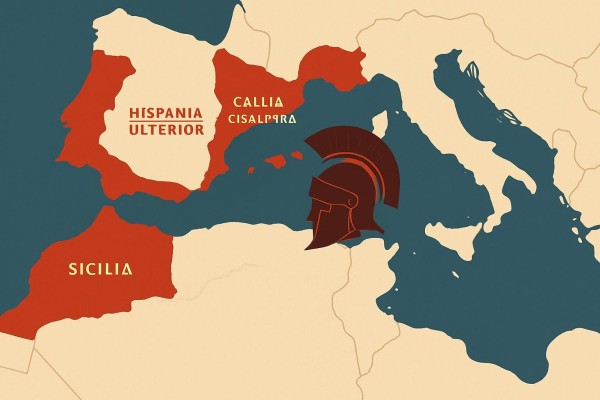
Take Sicilia. As Rome’s first province outside the Italian peninsula, securing Sicilia meant access to vital Mediterranean sea lanes. It wasn't just a prize; it became a crucial granary that supplied Rome with grain and boosted its capacity to sustain larger armies and urban populations.
In fact, Sicily’s role exemplified how Roman governors had to evolve their governance style—from military conquest to administrative rule—to effectively manage these overseas territories.
Quick Take: Sicilia’s annexation marked Rome’s first experience with provincial administration far from the Republic’s core. It tested, and ultimately refined, Rome’s ability to blend military presence with civil governance.
Moving westward, Hispania Ulterior was a hugely important territory for Rome—not only because of its vast mineral wealth but also because it served as a springboard for further expansion into the Iberian Peninsula. The region’s rugged landscape and fiercely independent tribes made control difficult at first, which forced Rome to adapt a more nuanced military and diplomatic approach.
This wasn’t just about brute force; it was about winning allies and integrating diverse peoples into the Republic’s growing network. Recent scholarship has emphasized how the Roman military presence there evolved from initial conquest to a long-term commitment of provincial defense and local cooperation.
What about Gallia Cisalpina?
Gallia Cisalpina—literally “Gaul this side of the Alps”—was Rome’s gateway to northern Europe. Unlike Sicilia and Hispania, its proximity to Rome made it a kind of buffer zone, crucial for protecting the Republic’s northern borders. But that meant military campaigns here were frequent, and the region’s political integration was patchy at best.
Historical evidence suggests the gradual transformation of Gallia Cisalpina from hostile territory to Romanized province was a messy, decades-long process, involving both settlement policies and alliances with local elites.
“Rome’s expansion was not a simple march of soldiers—it was also a delicate weaving of cultures, politics, and economics.”
Looking closer at the economic shifts these provinces inspired, all three brought new vitality to Rome. From Sicilia’s grain fields to Hispania’s mines and Gallia Cisalpina’s fertile lands, these resources fed into a burgeoning Roman economy that fueled military campaigns and urban growth. But the transition came with challenges—taxation systems had to be overhauled, and local elites needed to be co-opted into Roman rule, rather than crushed.
Interestingly, recent studies highlight the diversity in how Rome governed these areas:
- Sicilia was administered under a praetor with direct military command, mainly focused on securing trade and agricultural output.
- Hispania Ulterior saw a blend of military oversight and local autonomy, enabling complex tribal alliances to persist.
- Gallia Cisalpina eventually gained Roman citizenship rights earlier than many other provinces, showing Rome’s willingness to offer political incentives to secure loyalty.
This variance in governance reflects Rome’s flexibility—a factor often overlooked but critical to their success. It also sheds light on common misconceptions: a one-size-fits-all approach didn’t exist in Roman provincial rule.
Many tend to imagine Rome’s expansion as ruthless and uniform, but—and this is key—the Republic was pragmatic and adaptive.
Picture a 30-something Roman official assigned governance over Hispania Ulterior, let’s call him Marcus. His job wasn’t just to send troops out and collect taxes. He had to navigate local customs, negotiate peace with tribes like the Lusitanians, and implement Roman law without sparking rebellion.
This human side of provincial management often gets lost in grand historical narratives, but it’s where Rome’s true challenge—and achievement—lies.
Tip: When studying Roman expansion, consider the interplay between military conquest and administrative innovation. Both were vital to sustaining growth.
In practice, this means if you’re just starting to explore Roman history, don’t get stuck on who won each battle. Instead, look for how Rome absorbed and transformed each region culturally, politically, and economically. It’s a dynamic story with lasting impacts.
Have you ever wondered how these provinces influenced the Roman Republic’s endurance? That’s exactly the kind of question that leads to fascinating discoveries.
Bringing it All Together
In sum, Sicilia, Hispania Ulterior, and Gallia Cisalpina were more than just additions to Rome’s territory. They represented different faces of provincial expansion: maritime dominance, economic integration, and borderland security.
Their annexation challenged Rome to adapt governance methods, shift military strategy, and rethink economic policies. Exploring recent research reveals the complexity beneath the surface, reminding us that history is never as simple as it first appears.
Reflection: How might understanding Rome’s provincial strategies help us view modern governance challenges? Is there wisdom in balancing military power with local engagement?
요약
고대 로마 공화국의 지방 확장은 시칠리아, 히스파니아 울테리오르, 갈리아 키살피나 각기 다른 전략적, 군사적, 경제적 중요성을 통해 이루어졌다. 시칠리아는 지중해 해상 통제와 곡물 공급망 확보에 결정적 역할을 했고, 히스파니아 울테리오르는 광대한 자원과 복잡한 부족 연합관계의 관리라는 과제를 제공했다. 갈리아 키살피나는 북부 국경 안정을 위한 완충지역으로 기능하여 로마의 통치방식과 지방법 체계를 실험하는 장이 되었다. 이들 지방의 발전 단계와 참여 과정에서 로마는 단순한 정복을 넘어 현지 정착민과 연합관계를 중시하는 통치 방식을 발전시켰으며, 이는 공화국 확장의 지속 가능성을 확보하는 핵심 동력이었다. 최신 학술 연구는 이러한 복합적 변화와 비교통치의 실체를 더욱 명확히 하여, 로마가 어떻게 실용적이고 유연한 방식으로 지방 통치를 성공시켰는지 조명하고 있다.
#AncientRome #RomanRepublic #ProvincialExpansion #Sicilia #HispaniaUlterior #GalliaCisalpina #RomanMilitary #RomanEconomy #HistoricalGovernance #RomanHistory
댓글목록0