Auspicium: Shaping Law in the Ancient Roman Republic

 운영자
운영자
본문
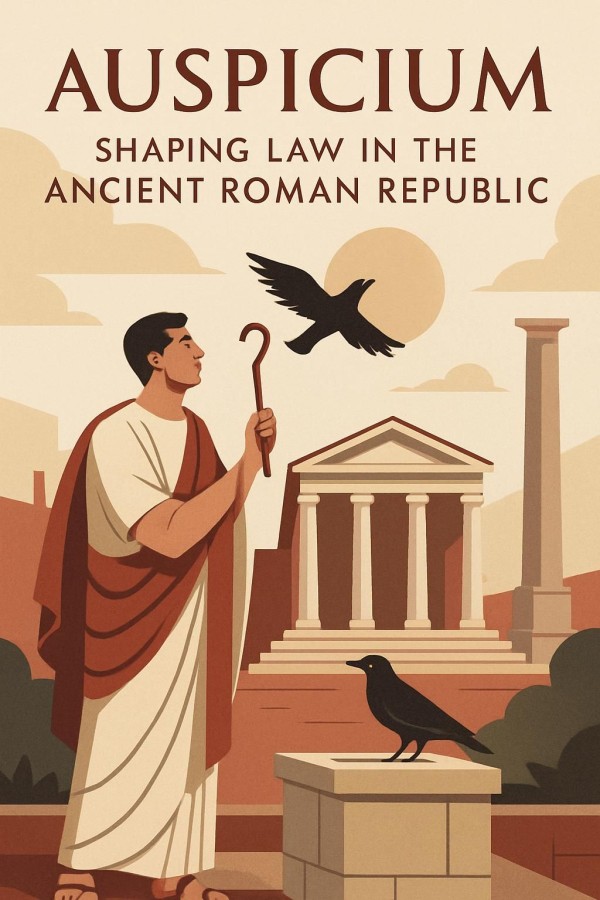
Auspicium—the sacred act of divining the will of the gods via observation of natural signs, especially birds—was indispensable to governance in the Roman Republic. More than just a ritual; it was a cornerstone of political legitimacy and public life. From military campaigns to senatorial decisions, understanding the deeper function of Auspicium enables us to grasp the intricate relationship between religion, law, and power in ancient Rome.
What Was Auspicium?
Derived from the Latin words avis (bird) and specere (to look), Auspicium literally means "looking at birds." It referred to a state-sanctioned ceremony performed by augurs, priests specially trained in interpreting omens from the flight patterns, songs, or feeding habits of birds.
Not merely superstition, Auspicium was a compulsory prelude to all significant civic actions, including elections, enacting laws, starting wars, or holding assemblies. The ceremony was a profound statement of obedience — a public declaration that human decisions needed godly approval.
The Legal Force of the Auspices
The legal structure of the Republic intertwined tightly with this religious custom. If unfavorable omens—called vitia—were observed, magistrates were obligated to halt proceedings. The power to annul political actions on religious grounds was immense, making manipulation both possible and perilous.
Citizens expected their leaders, from consuls to tribunes, to respect the sacred conventions of the auspicium. Political rivals sometimes exploited the process: opponents could challenge the legality of a law or election by claiming that blotched or incomplete auspicium rituals “polluted” the decision.
For example, a tribune could “watch the skies” (servare de caelo) specifically to interrupt an assembly. Announcements that “the gods did not consent” carried enough weight to derail vital legislation or military action.
Auspicium, Social Order, and Political Struggle
The authority to take auspices was not conferred on all citizens. Rather, it was the privilege of the patrician class and, to a lesser extent, certain plebeians who had attained magisterial offices. This elevated the social status of the augur, endowing the role with enormous political significance.
Over the centuries, the struggle of the orders saw the plebeians demanding and eventually receiving access to the colleges of augurs, signaling a slow democratization of divinatory authority.
Ritual Process: Interpreting the Divine Will
To seek the gods’ approval, the Roman magistrate—often accompanied by augurs—would ascend to a consecrated site, demarcate a sacred space (templum), and commence the vigil.
- Observation – Watching the direction, number, and species of birds.
- Auditory signs – Paying heed to the chirping and squawking, which could foretell fortune or doom.
- Immediate Omens – Unusual phenomena could override ordinary auspices (thunder, sudden silence, or appearance of rare animals).
Only favorable auspices allowed continuation. Any omen received was meticulously recorded, often used as the legal basis for or against proceedings in the Senate or assemblies.
Auspicium and the Making of Roman Law
The enduring influence of Auspicium on Roman law cannot be overstated. Every lex (law) passed in the assemblies, every official act by a magistrate, followed the formulaic inquiry into the will of the gods. The very notion of imperium (the right to command) came stamped with religious approval, and abuse of auspicium was punishable by charges of impiety or even treason.
- Elections halted by ill-omens could be declared null and void.
- Senatorial decrees and military commands required proper auspices for validity.
- Plebs and patricians alike could challenge procedures on religious technicalities.
To act without divine approval was to risk the wrath of gods and people, making auspicium a unique hybrid of law and piety.
Tensions: Manipulating the Sacred
With so much at stake, ambitious men sometimes manipulated or fabricated auspices to control outcomes. The Lex Cornelia regulated augural corruption, but accusations of malpractice continued into the late Republic. Both Cicero and Julius Caesar confronted controversies over the legitimacy of auspices.
The ultimate irony: the more legalistic and political auspicium became, the more its spiritual purity became contested—mirroring the shifting balance between traditional authority and popular sovereignty in Roman society.
Legacy of Auspicium: Magic, Law, and Memory
Even as the Republic transitioned toward monarchy and later empire, the ritual framework of auspicium persisted. Augustus and later emperors boasted their own augural privileges, using them as tools of both propaganda and legitimacy.
Today, echoes persist in the language of contemporary governance: "inauguration" comes directly from augural rites, reminding us that the blend of religion and politics is an ancient—yet surprisingly modern—phenomenon.
Conclusion: Understanding Auspicium's Role in Roman Rule
Navigating the complex relationship between divine signs and legal authority gives us not only a deeper appreciation of Roman society, but also the way humans construct legitimacy and order. Auspicium was a sophisticated form of ritual communication—one that policed the boundaries of power, ethics, and social hierarchy.
By respecting the god’s will through public ritual, Romans taught that law and community were sacred trusts. The legacy is unmistakable: the logic of “reading the signs” runs through history, shaping how we still interpret mandates, moral obligations, and collective destinies.
Keywords
요약
아우스피키움(Auspicium)은 고대 로마 공화정의 핵심 종교·법적 의식으로, 각종 정치적∙군사적 결정에 신의 뜻이 반영되었음을 확인하는 절차였다. 이는 법적 합법성과 사회 질서, 지도자의 권력을 정당화하는 수단이었다. 비록 정치적으로 악용되거나 논란이 되기도 했으나, 로마인에게 법과 종교가 얼마나 밀접하게 연결되어 있었는지를 보여준다. 오늘날까지도 이 영향은 여러 정치적·법적 의례에 남아 있다.
댓글목록0