Nexum: Debt and Law in the Ancient Roman Republic

 운영자
운영자
본문
Nexum: Debt and Law in the Ancient Roman Republic
Unlocking the Mystery of Slavery, Obligation, and Social Order in Ancient Rome
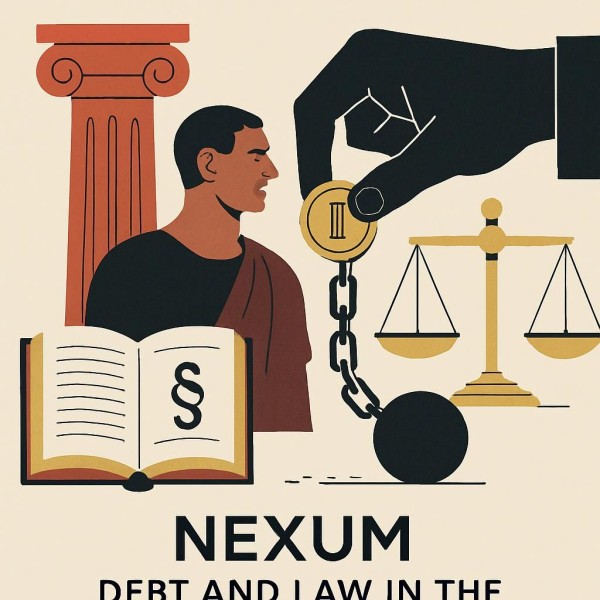
What Was Nexum?
Nexum was not merely a contract; it was a defining institution at the heart of early Roman society. It represented a form of debt bondage, binding citizens both legally and personally to their creditors. This legal framework reflected the highly stratified society and the inherent struggle between different classes during antiquity.
The origins of nexum stretch back to early Roman legal development, rooted in customary law and later formalized in the Twelve Tables. This debt contract, while ultimately abolished, serves as a vivid window into ancient Rome’s complex relationship with wealth, law, and personal liberty.
The Legal Structure and Ritual of Nexum
Unlike simple contracts, nexum was a solemn transaction involving ritual. Borrowers often performed a ceremonial act, symbolizing their obligation by delivering some copper and scales before witnesses, thereby agreeing that failure to pay would result in the surrender of their own liberty.
This process underscored the deep intertwining of religion, law, and social hierarchy. The scales themselves became a metaphor for justice, yet also represented the weight—quite literally—of Roman creditors’ power.
Nexum in Society: Class Conflict and Power
The effects of nexum deeply impacted Roman social dynamics. The Patricians (aristocratic elite) often lent to Plebeians (commoners), whose subsequent inability to repay cast them into debt servitude.
This arrangement fueled bitter social tensions, as indebtedness became a mechanism for perpetuating inequality, sparking numerous political crises and reforms.
Human Collateral: Daily Life and Experiences
Life for nexi—those bound by nexum—was harsh. Although not slaves by birth, their status was scarcely better. Nexi were often subjected to hard labor and public humiliation, and their plight was a frequent theme in the literature of Republican Rome.
Various Roman authors, such as Livy and Cicero, document the experiences of those caught in this legal trap, emphasizing both the cruelty and the social necessity of the arrangement in a society that lacked developed commercial lending systems.
Economic Mechanisms and Social Mobility
Nexum, for all its brutality, was also an economic instrument. Rome’s early agrarian economy was cash-poor, and lending using personal freedom as collateral was often the only way for citizens to access funds for sowing seed or surviving famine.
Yet the risks of downward social mobility were immense. Families could fall from independent landholders to nexal laborers in a single season of bad harvest, while wealthy creditors expanded their estates and power base.
Legal Reforms and the Abolition of Nexum
Over time, the mounting civil unrest engendered by abusive creditors led to fierce debates and legislative reforms. The Lex Poetelia Papiria (circa 326 BCE) is widely cited as abolishing nexum, releasing existing debt bondsmen and protecting future citizens from involuntary servitude due to debt.
Historiographical Perspectives
Modern historians debate the exact nature of nexum. Some see it as primarily a legal contract, others as a form of proto-slavery blurring the line between citizen and chattel. The lack of surviving direct contracts makes it a challenging, but fascinating, topic for academic exploration.
Regardless of interpretation, nexum remains a powerful symbol of ancient Rome’s ability to balance private interests, social stability, and evolving notions of justice.
Legacy of Nexum in Roman Law
The abolition of nexum paved the way for subsequent development of more sophisticated contract laws and protections for personal liberty in Rome. Elements of Roman legal innovation—debtor protections, contracts, and the rights of citizenship—echo throughout later Western legal traditions.
Conclusion
Nexum’s story is not just about financial transactions; it is about the struggle for dignity, freedom, and equity in a world where law and power often went hand in hand. By examining nexum, we understand how societies shape, and are shaped by, the tools they use to manage debt and obligation.
Key Takeaways
- Nexum was a unique form of debt bond in early Rome, binding debtors to creditors through solemn ritual.
- It created severe social and individual consequences, including forced labor and loss of liberty.
- The outcry against nexum fueled important legal reforms, notably its abolition by the Lex Poetelia Papiria.
- Its historical legacy continues to shape discussions of justice, personal freedom, and economic life.
Summary
넥숨(Nexum)은 고대 로마 공화정에서 채무와 법, 자유를 둘러싼 논쟁과 계층 갈등을 잘 보여주는 제도입니다. 채무자는 의식적인 계약 체결을 통해 자신의 자유를 담보로 잡히기도 했으며, 이는 사회와 법의 발전을 촉진했습니다. 넥숨의 폐지는 로마 시민권 보호와 현대 법체계에 영향을 미친 중요한 전환점으로 평가됩니다.
댓글목록0