Notable Figures: Ariovistus in the Roman Republic

 운영자
운영자
본문
Notable Figures: Ariovistus in the Roman Republic
Ariovistus stands at a crossroads of narrative and reality: a Germanic leader whose clash with Rome crystallized political anxieties in the late stages of the Ancient Roman republic. Known primarily from Julius Caesar’s account in the Commentarii de Bello Gallico, Ariovistus is both a historical agent and a rhetorical foil in a drama about power, legitimacy, and the right to rule foreign peoples.
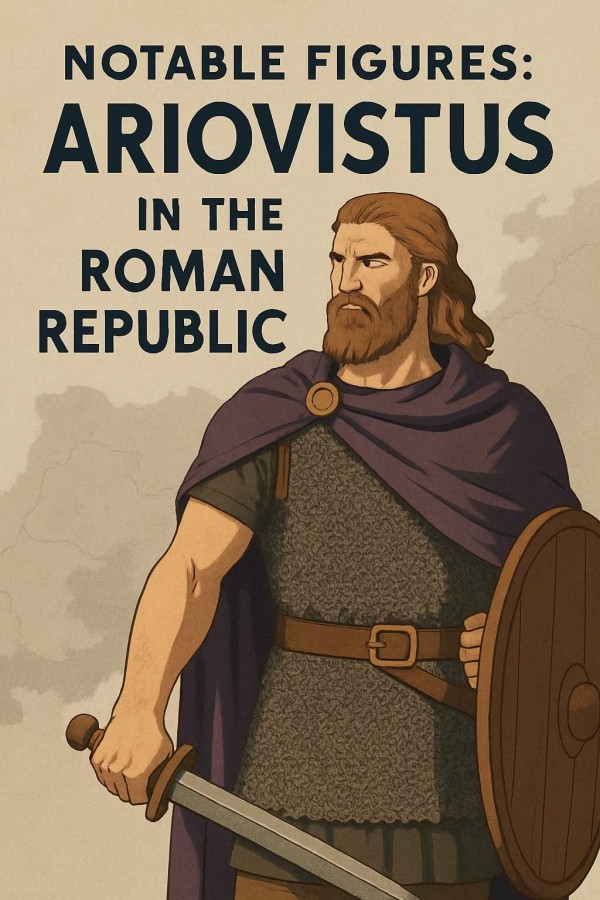
Image: A nineteenth-century imagining of Germanic chieftains; serves as a visual prompt for Ariovistus’s presence in Roman memory.
The immediate story is straightforward: Ariovistus, a leader of the Suebi or a confederation of Germanic tribes, crossed the Rhine and settled in Gaul. He demanded land for his followers, accepted gifts, and at times behaved as if he ruled the territory. His posture provoked the concern of Roman allies and, crucially, of Julius Caesar. In 58 BCE Caesar responded with a military expedition that culminated in the defeat of Ariovistus at the Battle of the Vosges. But beneath the campaign’s surface lay questions about diplomacy, sovereignty, and Roman self-image.
Political Repercussions — Caesar framed the conflict as a defense of Roman allies and an assertion of Republican authority. To the Senate and the Roman populace, Ariovistus’s settlement in Gaul symbolized the creeping presence of foreign kings who challenged Roman influence.
Cultural Context — For the Germanic tribes, movement and the negotiation of land were part of their social practice. Ariovistus’s claim was not merely conquest; it was a political remedy for hungry followers after migrations and skirmishes. Rome’s response reveals more about Roman anxieties than about an absolute right to the soil.
Ariovistus thus functions on two planes: as a military opponent defeated in the field, and as an emblem of foreign kingship that Roman Republican ideology found threatening.
Ariovistus in Caesar’s Narrative
Caesar’s narrative is artful. He emphasizes Ariovistus’s arrogance, his acceptance of kingship, and his mistreatment of Gallic communities. Whether Caesar’s depictions are entirely accurate is uncertain; his Commentaries are simultaneously military report, political justification, and crafted propaganda aimed at Rome’s public and its elite. By portraying Ariovistus as a foreign despot, Caesar legitimized his own actions as protective rather than expansionist.
The episode with Ariovistus also provided rhetorical ammunition: Caesar could present himself as the rescuer of Gaul, positioning Rome as a stabilizing force rather than a rapacious invader. This narrative would echo throughout later Roman engagements with migratory peoples.
Military and Tactical Notes
Tactically, the confrontation with Ariovistus reveals Roman adaptability. Caesar confronted a larger infantry and cavalry force in difficult terrain. He used discipline, logistics, and the psychological impact of Roman organization to offset numerical inferiority. Ariovistus, by contrast, relied on shock, mobility, and alliances that fragmented when confronted by a cohesive Roman strategy.
Historiographical Echoes
Later historians and antiquarians have wrestled with Ariovistus’s place in the grand sweep of Roman history. Was he a proto-national leader defending his people, an opportunistic warlord seeking territory, or simply a useful antagonist for Roman propaganda? Modern scholarship tends to treat him as a complex actor, situated within the larger migratory dynamics of late Iron Age Europe.
Ariovistus’s portrayal also warns readers about the limitations of our sources. When the only surviving detailed account comes from one side, it is necessary to read between the lines, to weigh archaeological evidence and the testimony of later writers, and to appreciate how rhetorical needs shape historical memory.
Why Ariovistus Still Matters
There are several reasons Ariovistus continues to attract attention. He illustrates how Rome perceived and reacted to mobile tribal polities; he allows reflection on leadership styles beyond the Mediterranean; and he forces a confrontation with the instruments of Roman power—diplomacy, military force, and public narrative. For students of the Ancient Roman republic, Ariovistus is a lens through which to examine the Republic’s borders, ambitions, and self-justifications.
In short, Ariovistus is more than a footnote. He is a foil who exposes the limits and the methods of Republican rule, and he remains a compelling figure for anyone interested in Rome’s encounters with its northern neighbors.
Whether viewed as an antagonist of Rome or as a leader acting in the interests of his people, Ariovistus forces contemporary readers to confront the intertwined processes of migration, militarization, and political justification that shaped the late Republic and the transition to imperial rule.
As a figure he invites us to question simplistic binaries—Roman civilization versus barbarian chaos—and to appreciate the negotiations that took place along the edges of empire, when power, legitimacy, and survival were renegotiated in blood and rhetoric.
Tags: Ariovistus Ancient Roman republic Gallic Wars Caesar Germanic tribes Republican ideology Border politics Historiography Migration Military strategy
요약: 아리오위스투스는 갈리아에서 로마 공화국과 맞선 게르만 지도자로, 줄리어스 카이사르의 서술을 통해 주로 알려져 있다. 그는 이주와 토지 요구로 인해 갈등의 중심에 섰고, 카이사르는 이를 공화국과 동맹국을 보호하는 정당한 행동으로 제시했다. 실제 사건의 본질은 보다 복합적이며, 아리오위스투스는 로마의 경계 정책, 권력 정당화 방식, 그리고 이동하는 민족과의 상호작용을 이해하는 데 중요한 실례를 제공한다.
댓글목록0