Notable Figures of the Roman Republic: Titus Labienus

 운영자
운영자
본문
Notable Figures of the Roman Republic: Titus Labienus
Exploring the Shrouded Legacy of a Complicated Commander
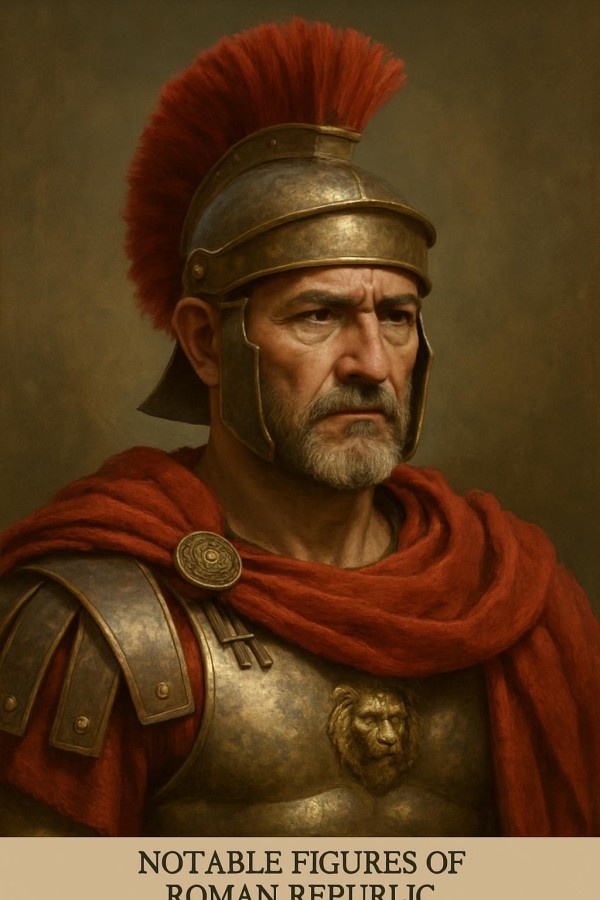
An Elusive Shadow: Who Was Titus Labienus?
The Ancient Roman republic was a fertile ground for ambition, heroism, and at times, tragic downfall. Woven into its unpredictable tapestry is the figure of Titus Labienus, a name simultaneously celebrated and overshadowed by the towering legacy of Julius Caesar. Few men traversed the tumultuous landscape of late Republican Rome with such intrigue—both as a loyal lieutenant and a fateful adversary.
Early Life & Political Foundations
Born into a plebeian family in Picenum, a region that would become synonymous with Caesar’s rise, Labienus cultivated early political alliances that foreshadowed his later exploits. He climbed the cursus honorum—the ladder of Roman offices—gaining essential legal and military experience. It was in this formative crucible that his dedication to the Republic, mastery of logistics, and grasp of battlefield tactics came to the fore.
Among Rome’s intricate political networks, Labienus’s earliest reputation was forged less by oratory and more by his pragmatic, sometimes blunt diplomacy. Associations with the Populares and the implicit trust of Caesar laid the groundwork for a partnership that would soon alter history.
The Loyal Legate: Caesar’s Right Hand in Gaul
Titus Labienus stepped into the eye of history with the Gallic Wars. As Caesar’s principal legate, Labienus orchestrated some of the most daring campaigns on foreign soil. His strategic acumen at the Battle of Lutetia and his ability to quell insurgencies in the Treveri region set him apart from Rome’s other commanders.
Repeatedly entrusted with legions, Labienus displayed both the steely resolve to act independently and the flexibility to coordinate with Caesar’s overarching vision. In many ancient sources, his role is viewed as indispensable to Caesar’s sustained success, especially when the odds tipped precariously toward disaster.
The Turning Point: Rift and Renunciation
With the dawn of civil war, the narrative of Titus Labienus took a sharp, unexpected turn. In a defining moment that continues to puzzle historians, Labienus abandoned Caesar for the Optimates—Rome's senatorial elite fighting for the old order. Was it a matter of principle, shifting ambition, or political pragmatism that compelled such defection?
- Labienus’s shifting allegiance shocked both friend and foe.
- He transformed overnight from trusted general to formidable enemy.
- Primary sources offer conflicting motivations, from idealistic fidelity to the Republic, to personal umbrage at Caesar’s ascent.
Once aligned against his former commander, Labienus’s deep knowledge of Caesar’s tactics rendered him a dangerous opponent—ironically, one of Caesar’s greatest challenges in the bitter wars that followed.
Labienus at the Battlefront: Civil War and the Final Campaigns
Fate would ultimately pit Labienus against Caesar at some of the bloodiest fronts of the Roman Civil War: Dyrrachium, Pharsalus, and later, the plains of Africa. Here, Labienus’s military prowess became even more unmistakable, both in success and failure. His fate encapsulated the tragedy of civil conflict: fighting against former comrades, risking all for an uncertain ideal amidst the crumbling Republic.
At Pharsalus in 48 BCE, fate dealt Labienus and the Optimates a decisive blow. Even so, his resistance in North Africa illustrates the ferocity—and the indefatigable spirit—that defined his military life until his death in 45 BCE at the Battle of Munda, the last stand of Caesar’s opposition.
Legacy: The Unresolved Enigma of Titus Labienus
The memory of Titus Labienus is scarred with the paradoxes of loyalty, betrayal, and fierce idealism. His career, more than a mere foil to Caesar’s genius, offers a study in the tragic complexities of leadership under the grinding machinery of Roman politics.
Posthumously denigrated by some, subtly praised by others, Labienus remains an underexplored figure whose motivations evoke debate even today.
Was he hero, opportunist, or republican martyr? The answer, much like Republican Rome itself, is blurred by time and partisanship. What is certain is his indelible mark—a reminder that history’s supporting actors often shape its course as irrevocably as the protagonists.
Conclusion: Labienus in Context—Contemporary Lessons from Republican Strife
The story of Titus Labienus transcends the bounds of biography; his trajectory from steadfast subordinate to relentless rival offers insight into the perilous dance of power, conviction, and destiny. For those who study the Ancient Roman republic, Labienus is an essential—if enigmatic—character whose existence prompts reflection on the fragile bonds that tether men and states alike to their ideals.
댓글목록0