How Rome Expanded: The Province of Judea

 운영자
운영자
본문
How Rome Expanded: The Province of Judea
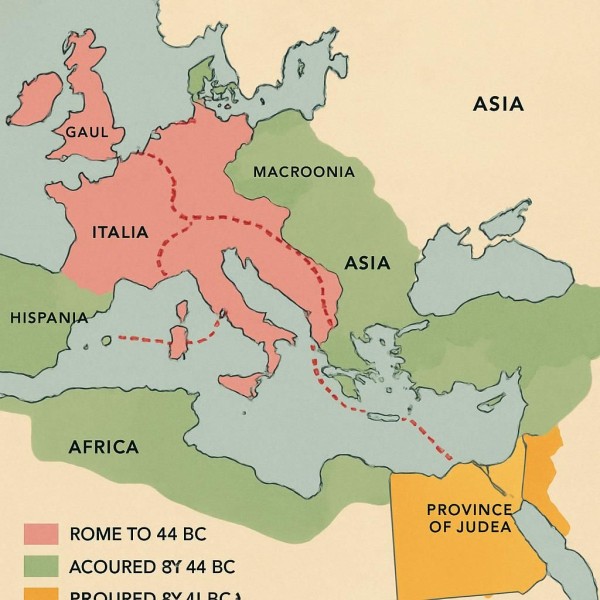
Few chapters of Mediterranean history are as defining as the era when Rome transformed itself from a city-state to a power capable of shaping the entire world around it. Nowhere was this ambition more vivid than in its expansion eastward, into lands diverse in culture and geography. Judea, at the eastern edge of the Mediterranean basin, became a pivotal province, connecting trade, ideas, religion, and strategy in ways we still study and debate today.
Setting the Stage: The Republic Eyes the East
By the first century BCE, the Roman state was no longer content controlling only its peninsula. Success in the Punic Wars had given Rome both strategic confidence and access to wealth and influence abroad. Eastern Mediterranean kingdoms, including Egypt, Syria, and Judea, became objects of Roman interest—not simply through war, but via intricate webs of alliances, economic leverage, and political intrigue.
The region of Judea was a critical juncture for east-west commerce and also a crossroads for religions, languages, and imperial ambitions. Control over Judea offered not just a gateway to the Levant and Arabia, but also access to vast networks of trade routes running from Africa, Asia, and Europe.
Between Hellenism and Judaism
During the 2nd century BCE, the Seleucid Empire's control over the region began to weaken, while indigenous Jewish rulers—namely the Hasmoneans—sought independence and self-determination. The result was Judea's brief but vibrant period of autonomy, but internal conflict soon called for outside intervention.
When civil war broke out between Hasmonean claimants in the mid-1st century BCE, both sides appealed to Rome for arbitration. The Roman general Pompey responded, seizing the opportunity for influence. In 63 BCE, Roman legions entered Jerusalem, marking the effective start of Roman suzerainty over Judea.
From Client Kings to Direct Rule
For several decades, Rome employed a pragmatic strategy: Judea was ruled by local dynasts, including the famous Herod the Great, who swore allegiance to Rome. Herodian Judea flourished with massive building projects—a visible symbol of Rome's indirect hand, and a means to maintain peace among a population proud of its traditions.
Yet, tensions simmered beneath the surface. Upon Herod's death, instability and dissatisfaction led Rome to transition Judea from a nominally autonomous client kingdom to a directly-administered Roman province by 6 CE. The shift brought a series of Roman governors to Jerusalem, most notably Pontius Pilate.
Conflict, Rebellion, and Transformation
The imposition of direct Roman rule was unpopular among many Jewish communities. Religious differences, increasing taxation, and cultural tensions frequently sparked unrest. In 66 CE, the resentment boiled over into open revolt—the famous First Jewish–Roman War. The war was brutal and destructive, culminating in the siege of Jerusalem and the destruction of the Second Temple in 70 CE.
The war would change Judea and Rome alike. For the Romans, the suppression of revolt demonstrated the might and limitations of imperial control—managing distant cultures with deep religious roots was never simple. For Judea, it marked the start of profound changes: the loss of political autonomy, mass displacement, and a diaspora that would echo into future centuries.
Legacy: The Lasting Impact of Roman Judea
Despite fierce resistance and tragic outcomes, the integration of Judea into the Roman sphere profoundly influenced both societies. Roman roads, urban planning, and even some administrative practices left their mark on Judea. Meanwhile, Judea’s spiritual traditions and literature would contribute immensely to the broader religious and cultural history of the empire.
From the synagogues of Alexandria to the streets of Rome itself, the presence of Judean communities shaped imperial culture. Eventually, the rise of Christianity—rooted in the context of Roman Judea—would transform not only the region but the entire trajectory of European and world civilization.
Conclusion
The story of Judea's transition from a fiercely independent kingdom to a complex Roman province is inseparable from the broader narrative of Rome's monumental expansion. Here, cultures collided, ideologies flourished, and empires learned that conquest was only the beginning of a long and arduous process of integration.
In examining Judea under Roman rule, we see both the high ambitions and heavy costs that came with creating an empire unmatched in history.
Keywords
Rome Judea Republic Hasmonean Herod Pompey Temple War Province Diaspora
요약
로마 공화정의 팽창은 유데아 지역에서 결정적인 변곡점을 만들어냈습니다. 처음에는 지방 통치자와 협력을 통해 간접적으로 지배했지만, 내부 갈등과 외부 압력으로 직접 통치로 전환되었습니다. 이 과정에서 종교, 경제, 문화적 긴장이 커져 1차 유대-로마 전쟁과 같은 대규모 분쟁이 발생했으며, 결국 유대는 로마의 체제 안에서 자치권과 중요한 유산을 잃었습니다. 그러나 이 경험은 로마 제국과 유데아 모두에게 깊은 흔적을 남겼고 오늘날까지 이어지는 역사적, 문화적 영향을 남겼습니다.
댓글목록2
이지연님의 댓글
글을 읽고 난 후의 개인적 소감입니다. 전체적으로 로마의 행정적 판단과 군사적 전략이 어떻게 지역 통치를 형성했는지 잘 정리되어 있어 이해에 도움이 되었습니다. 다만 현지 주민들의 관점이나 종교적·사회적 충격에 대한 서술이 상대적으로 적어 한쪽 관점에 치우친 느낌도 들었습니다. 지방 관리·조세·군 주둔의 상호작용과 반발이 이후 반란과 장기적 변화를 촉발했다는 점은 흥미로웠지만, 당시의 실제 피해 규모나 주민들의 일상 변화에 대한 구체적 사례가 더 추가되면 좋겠다고 생각합니다.
개인적으로는 제국의 확장 과정을 단순한 영토 확대로만 보지 않고, 통치 방식의 변화와 문화적 상호작용의 관점에서 더 많이 다뤄졌으면 합니다. 특히 지방 주민들의 저항과 적응, 그리고 제도적 통합이 어떻게 서로 영향을 주었는지에 대한 비교가 있으면 현대의 지역 통치 문제를 이해하는 데도 도움이 될 것 같습니다.
관련 관심사로는 여행이나 야외활동을 위한 의류 정보도 유용하다고 생각해 추천합니다. 경량패딩 및 등산 의류 종류와 브랜드별 상품 소개는 이 링크에서 확인할 수 있습니다: 경량패딩 및 등산 의류의 종류와 브랜드별 상품 소개
문예원님의 댓글
로마의 팽창과 유데아의 이야기는 마치 주성치의 영화처럼 복잡한 갈등과 유머가 얽혀 있는 것 같아요. 처음에는 협력과 조화를 이루려 했지만, 결국 내부 갈등과 외부의 압력이 폭발하며 투쟁으로 이어진 모습이 정말로 인상적입니다. 특히 1차 유대-로마 전쟁은 정말 극적인 장면이 떠오릅니다.
주성치의 여러 작품들처럼 이 사태 또한 웃기고 슬픈 측면이 다 있죠. 그의 영화에서 보여주는 인간의 복잡한 감정들을 통해 우리는 그러한 역사적 사건이 단순한 전쟁이나 정복의 이야기가 아니라는 걸 알 수 있습니다. 주성치의 세계를 더 알고 싶다면 여기를 클릭해 보세요. 이처럼 로마와 유데아의 갈등을 바라보는 것도 조금은 유머를 가미하여 생각해볼 필요가 있지 않을까요?