Numantia and Roman Expansion

 운영자
운영자
본문
Numantia and Roman Expansion
A sweeping look at a resilient city that tested the limits of Roman power and shaped the course of expansion in Iberia.
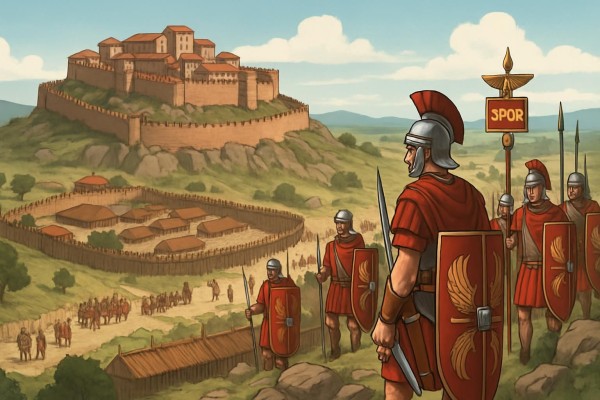
The story of Numantia occupies a unique place in the study of Roman military and political history. Located in the uplands of central Iberia, the city became a symbol of determined resistance against one of the Mediterranean's most disciplined powers. During the late 2nd century BCE, Rome was not simply expanding territory — it was also consolidating institutions, refining military practice, and testing how far a republic could project authority beyond the Italian peninsula. The encounter with Numantia thus illuminates both tactical realities on the ground and broader processes of incorporation and imperial identity.
To appreciate the clash between Numantia and Rome, it helps to consider the context: the Romans faced guerrilla-style warfare, localized tribal solidarity, and a terrain that favored the defenders. Commanders arriving from Italy, trained for pitched battles on open plains, found the wooded hills and fortified hilltops of Iberia to be a different kind of challenge. As sources and archaeology together show, the conflict was not a single pitched engagement but a series of campaigns, sieges, and attritional maneuvers that taxed both sides.
'From stubborn standstill to final capitulation, Numantia forced Rome to adapt its strategy and reconsider how to rule distant peoples.' — synthesis from archaeological and ancient narrative traditions.
A Siege that Tested Tactics
The protracted siege that ended in 133 BCE is often foregrounded in histories of Roman conquest. It demonstrates how logistics, engineering, and political will converged. Roman commanders — most famously the later Scipio Aemilianus, who brought decisive force and a renewed siege system to bear — built fortifications, install barracks and supply lines, and attempted to starve the city into submission. That this work required months of labor and careful supply management reveals how expansion could become a test of administrative capability as much as military prowess.
Conversely, Numantines used mobility, raids, and psychological resistance to frustrate Roman aims. They understood the value of endurance; defenders attempted breakouts, negotiated truces, and, according to some ancient accounts, preferred death or exile to living under Roman rule. Whether legendary portrayals of mass suicide are literally accurate or rhetorically charged, what remains clear is that this conflict left a deep mark on Roman cultural memory: the image of stubborn, 'barbarian' courage became part of the imperial narrative.
Political Echoes in Rome
Military success abroad translated into political capital at home. Generals who stamped out resistance in Iberia returned to Rome celebrated — or, at times, criticized — depending on factional alignments. The campaigns around Numantia illuminated several tensions within the polity: how much autonomy field commanders should have, the costs of long campaigns for the state treasury, and how Roman citizens perceived the integration of subject peoples. As historians have noted, the Iberian wars fed debates about citizenship, colonization, and the rights of allies.
This period also intersected with social strains in Rome itself. The same decades that saw the fall of Numantia witnessed political agitation by figures seeking reforms at home. Conquests abroad, therefore, were never isolated events; they were embedded in a tangled web of domestic politics, patronage networks, and the rising ambitions of military aristocrats.
Archaeology and the Material Record
Modern excavation at Numantia and nearby sites has helped correct some classical myths while confirming others. Pottery layers, fortification remains, and signs of rapid abandonment show the rhythms of siege warfare and civilian responses. Finds of weaponry and defensive works illustrate the intensity of hostilities, while household items left in haste suggest sudden departure or collapse. Material culture also illuminates trade links and cultural exchange: Iberian peoples were not isolated primitives but active participants in Mediterranean networks long before Roman domination.
Through careful stratigraphy and radiocarbon dating, archaeologists have mapped phases of habitation, destruction, and reoccupation. These results allow scholars to place the Roman campaigns in a dynamic landscape of human settlement and mobility, rather than a static tableau of civilization versus barbarism.
Cultural Consequences and Memory
How did Rome incorporate the memory of Numantia into its own identity? Literary sources emphasize victory and moral lessons: the republic could absorb lessons, punish obstinacy, and reward order. But Numantia also provided a cautionary tale about the limits of force and the costs of protracted conflict. In later Roman thought, narratives about Iberian resistance sometimes served as a mirror for evaluating the republic's character — when to compromise, when to press the attack, and how to treat defeated peoples.
Over centuries, the image of Numantia shifted between somber lament and martial exemplar. In modern Spain, Numantia has been reclaimed as a national symbol of resistance; in Rome, it became one chapter among many in the republic's long story of expansion. That duality — local heroism and imperial consequence — makes the site a rich case study for comparative historians.
Tactical Lessons and Military Evolution
The Roman response to Numantia included technical and organizational adaptations. Engineers learned to build more secure camps and to lay siegeworks suited to hilly terrain; supply logistics received increased attention; and the experience shaped recruitment and training priorities. These changes were not instantaneous but accrued through a process of trial and error. Roman armies that had once relied on legionary formations optimized for open-field engagements became more flexible, learning how to sustain operations in hostile, mountainous provinces.
At a broader level, Numantia emphasized that conquest required governance. Military occupation without effective institutions proved costly, and Roman administrators gradually developed provincial systems — taxation, garrisons, colonization schemes — that would define imperial rule for centuries.
Numantia in Comparative Perspective
Comparing Numantia to other resistances — in Gaul, Britain, or the eastern provinces — underscores common patterns. Small, determined polities could, for a time, blunt imperial momentum, especially when geography and social cohesion favored defense. Rome's ability to eventually prevail depended on a combination of military adaptation, relentless logistics, and political commitment. Examining these similarities affords insights into the nature of ancient imperial expansion and the recurring dilemmas of power projection across different contexts.
In short, the fall of Numantia was not solely a military story but a complex event with social, cultural, and institutional aftereffects. It pushed Rome to refine its approach to conquest and governance and left a lasting imprint on historical memory.
Quick takeaways:
- Numantia was a symbol of resistance that forced Roman tactical innovation.
- The siege and its aftermath influenced Roman provincial policy and military logistics.
- Archaeology helps disentangle myth from material realities, revealing complex exchange networks.
- The legacy of Numantia persists in narratives about liberty, identity, and empire.
Why Numantia Still Matters
Numantia is a prism through which we can view the mechanics of ancient expansion and the human cost of empire. It offers lessons about the interaction of military power and local society, the role of leadership and logistics, and how narratives of resistance are remembered and repurposed across time. For students of the Roman state — particularly the Ancient Roman republic period of vigorous outward expansion — Numantia is both a cautionary tale and an instructive episode in the formation of imperial structures.
Contemporary scholars continue to debate specifics: chronology, the exact sequence of campaigns, and the social composition of the Numantine defenders. Yet those debates only strengthen the site's value, prompting multidisciplinary research and renewed fieldwork.
Further Reading and Research Directions
For those eager to delve deeper, consult works that combine literary analysis with archaeological reports. Recent excavation summaries, comparative studies of Roman siegecraft, and syntheses of Iberian material culture create a richer, more nuanced portrait than classical narratives alone can supply. Cross-referencing epigraphic evidence and numismatic data helps frame the conflict within economic and administrative transformations that followed the Roman victory.
New technologies — including LIDAR surveys and GIS modeling — are opening fresh windows on ancient landscapes. These tools can reveal road networks, hidden fortifications, and patterns of settlement that refine our understanding of how and why Roman campaigns unfolded as they did.
Concluding Thoughts
The tale of Numantia and the Roman advance into Iberia is multifaceted: military engagement, cultural encounter, political calculus, and a richly layered memory. It showcases Rome's capacity to adapt while also highlighting the agency of those who resisted. As both a historical event and a symbol, Numantia invites reflection on the dynamics of power and the sometimes-unexpected ways local communities can influence global trajectories.
Tags:
If you're curious to explore further, consider pairing primary texts with excavation reports and maps. The interplay between narrative and material evidence is where much of the interpretive energy lies: texts tell us how Romans framed the event, while artifacts reveal the human realities of life under siege and the logistical complexities of prolonged campaigns. Numantia is a place where both story and stuff combine to produce a fuller historical picture.
요약: 이 글은 누만티아와 로마의 확장 과정을 통찰력 있게 조명한다. 누만티아의 저항은 단순한 군사적 사건을 넘어 로마의 전술적 적응, 보급과 행정 능력의 시험, 그리고 정치적·문화적 결과까지 촉발했다. 고고학적 자료는 문헌의 전설적 서술을 보완하며 실제 생활상과 폐허의 흔적을 보여 준다. 궁극적으로 누만티아는 지역 공동체의 저항이 어떻게 제국의 전략과 정체성에 영향을 미칠 수 있는지를 보여 주는 사례로 남아 있다.
댓글목록0