Tolosa: Rome's Gallic Province

 운영자
운영자
본문
Tolosa: Rome's Gallic Province
An elegant, richly detailed exploration of Tolosa in the era of the Roman Republic — politics, economy, urban life, and legacy.
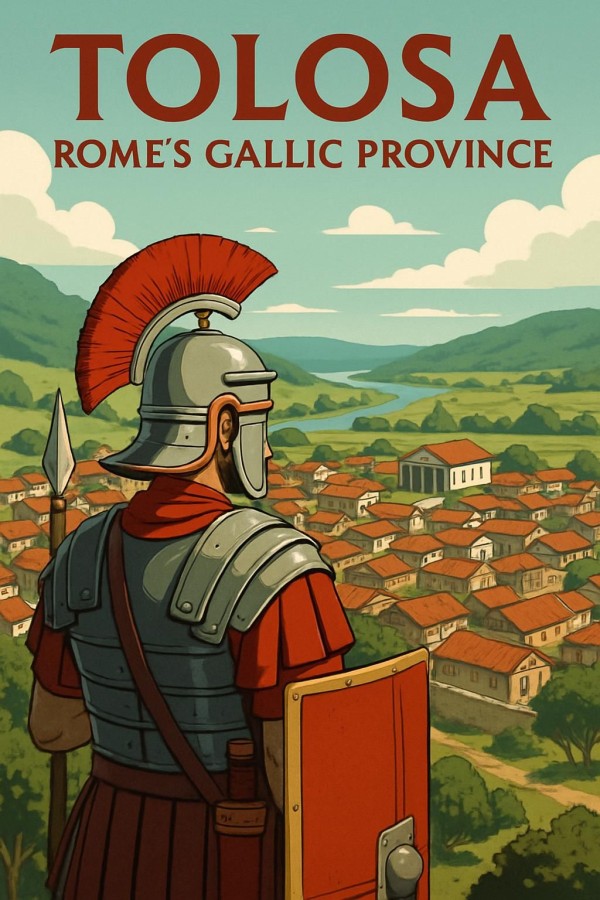
In the complex mosaic of the Roman Republic, the city of Tolosa stands as a compelling case of provincial transformation. Once a flourishing Celtic center in the heart of Transalpine Gaul, Tolosa was reconfigured by Roman institutions, commerce, and military imperatives. This article traces the contours of Tolosa's evolution: how indigenous networks intertwined with Roman legal frameworks, how the economy pivoted toward imperial markets, and how the town's cultural identity folded foreign elements into local traditions.
Tolosa's location, nestled on a river plain with access to upland roads, made it a node of exchange long before Roman garrisons arrived. Archaeological surveys and the study of epigraphic material reveal a community adept at craft production and long-distance trade. The transformation accelerated when Roman influence — expressed through alliances, colonization, and administrative reforms — remade the urban plan and social hierarchies. Markets, temples, and public works were built or adapted; local elites learned Latin epistolary forms and adopted Roman magistracies, while retaining distinctly Gallic patronage patterns.
Tolosa before Roman Incorporation
Prior to becoming an overtly Romanized municipality, Tolosa functioned as a crossroads between hilltop oppida and riverine communities. The local economy emphasized metallurgy, pottery, and artisanal textiles, industries that adapted readily to Roman consumption. Celtic social structures — tribal assemblies, patron-client ties, and sacred grove rituals — persisted alongside new civic institutions. Evidence for pre-Roman urbanization is visible in settlement patterns: densely packed residential blocks, craft workshops clustered near water sources, and fortified high places that controlled the hinterland.
Maps, burial forms, and trade amphorae all point to Tolosa as a dynamic interchange between indigenous creativity and external influence.
Integration with the Republic
Roman presence in Tolosa began as a mixture of diplomacy and coercion. Military campaigns in southern Gaul, followed by treaties and the establishment of client relationships, brought Tolosa into Rome's orbit. Over decades, formal institutions — municipal councils, codified law, and civic benefices — replaced purely kin-based governance. The city adopted Roman urban features: a forum for public business, basilicas for legal proceedings, and monumental architecture signaling imperial favor. Nevertheless, the process of incorporation was uneven; local magistrates often served as intermediaries, negotiating tax obligations and recruitment quotas while protecting local privileges.
civitas
and municipium labels were not mere formalities; they marked shifting legal rights and responsibilities.
"To study Tolosa is to watch the slow choreography of change: institutions overlay older traditions, a new urban grammar is rehearsed in stone, and memory survives in ritual, language, and law."
Economy and Production
Tolosa's economy under Roman influence diversified and specialized. Agricultural estates supplied grain and livestock to military outposts and urban consumers; the river facilitated the movement of timber, salt, and pottery. Local workshops produced ceramics with distinctive styles that combined Gallic motifs and Roman forms. Coins and ledgers reveal integration with Mediterranean trade networks; imports include oil amphorae, wine, and luxury textiles. Over time, taxation policies and market demands shaped land tenure, leading to a landscape dotted with villae and rural settlements oriented toward surplus production.
Craft specialization created social mobility: artisans who excelled in metalwork or dyeing could attain wealth and civic recognition, sometimes placing their names on public monuments in Latinized form.
Urbanism, Architecture, and Public Life
The Roman imprint on Tolosa's built environment was both programmatic and adaptive. Streets were re-laid into orthogonal grids in some districts, while other quarters retained irregular alleys reflecting older plots. Public architecture included baths, temples, and shrines that fused Roman and Gallic aesthetics. The forum functioned as a stage for public speech, commerce, and legal procedures; rostra and tribunals facilitated civic discourse. Residential houses ranged from modest atrium homes to elaborately decorated domus with mosaic floors and painted walls. The presence of inscriptions in both Latin and local dialects indicates a multilingual urban populace.
Urban renewal projects, often funded by wealthy patrons, projected prestige while also reordering civic space.
Religion, Identity, and Syncretism
Religious life in Tolosa illustrates cultural negotiation. Celtic deities continued to be venerated but were often equated with Roman gods in interpretatio Romana practice: native gods acquired Latin epithets, and ritual forms sometimes merged. Sacred groves and river cults remained significant, particularly in seasonal rites. Civic religion — imperial cult, public sacrifices, and festival calendars — created new communal rhythms. Epigraphic evidence shows dedications to both classical and local divinities, suggesting that religious identity was flexible and instrumental in forging broader civic loyalty.
Syncretism was a social technology — a way to preserve heritage while participating in wider Roman religious and political life.
Military and Political Significance
Although Tolosa was not a legionary base like some frontier towns, it had strategic value. Its roads connected to mountain passes, making it relevant for troop movements and supply lines. Nobles from Tolosa sometimes served in auxiliary units; service in Roman forces fostered new loyalties and returned veterans who became local patrons. Politically, Tolosa negotiated with provincial governors, hosted senatorial envoys, and participated in broader Gallic federations when imperial authority was weak. The city's elites used patronage networks, legal petitions, and public benefactions to secure influence.
IR references in inscriptions reveal the administrative ties that bound Tolosa to the Republic and later administrations.
Archaeology and the Historical Record
Modern excavations in and around Tolosa combine stratigraphic archaeology with material culture studies and epigraphy to reconstruct the city's Roman-period life. Pottery assemblages, coin hoards, and building foundations anchor chronological frameworks. Inscriptions carved in stone reveal magistrates' names, dedications, and legal formulas; these data permit prosopographical reconstructions and chronology of municipal reforms. While literary sources sometimes marginalize provincial towns, Tolosa's physical remains provide a direct window into everyday practices and the lived experience of provincial urbanism.
Material culture thus speaks where narrative histories are silent — pottery, lintels, and tombstones all bear witness to adaptation and continuity.
Legacy and Memory
The memory of Tolosa in later centuries is mediated through archaeological stratigraphy, medieval chronicles, and the persistence of place-names. Roman infrastructure often provided the backbone for medieval and early modern settlement patterns: roads became trade routes, former public spaces were repurposed, and Roman masonry was quarried for later construction. Contemporary civic identities sometimes draw on this deep past, celebrating Tolosa's Roman-era heritage through museums, reconstructions, and local scholarship.
The past is a palimpsest; Tolosa writes and rewrites itself across epochs.
Concluding Reflections
Tolosa's story under Roman rule is not a tale of simple replacement but of negotiation and synthesis. Institutions from Rome layered upon local practices, creating a civic fabric both resilient and adaptive. The city's economy reoriented toward imperial markets yet preserved local craftsmanship; public life adopted Roman ceremonies while sustaining regional rites. For historians and archaeologists, Tolosa offers a model of provincial life: a place where legal texts, material remains, and social behavior converge to reveal the complexities of cultural encounter.
For further reading, consult recent archaeological reports and collections of epigraphic sources that contextualize Tolosa within Transalpine Gaul and the broader Republic-era Mediterranean.
요약: 이 글은 톨로사(현지 로컬 명칭으로 불리던 도시)가 공화정 시대 로마의 영향 아래 어떻게 변화했는지를 조명합니다. 경제적 재편성, 도시적 재구성, 종교적 융합, 그리고 행정적 통합 과정이 상호작용하며 지역적 전통과 로마적 요소가 결합된 과정을 서술했습니다. 고고학적 유물과 비문 자료는 톨로사가 단순한 피지배지가 아니라 변화를 흡수하고 재구성한 능동적 공간이었음을 보여줍니다.
댓글목록1
양수지님의 댓글